
Pecan Farm Case Study
Building Soil Health with On-Farm Fish and Seaweed BiofertiliserMudgee, NSW, Australia
In 2023 a mixed farming operation growing pecan trees near Mudgee, NSW, adopted a SONIC On-Farm Biofertiliser Production System and fertilisation program to help improve soil health and reduce reliance on synthetic fertilisers. After a year, this is what they observed.
Case Study At A Glance
| CATEGORY | OUTCOME |
|---|---|
| Farm Type | Pecans, sheep |
| Location | Mudgee, New South Wales, Australia |
| Year of Case Study | 2024 |
| Primary Focus | Soil health and early tree growth |
| Management Changes | Since 2023 - On-farm biofertiliser production, foliar spray, rotational grazing |
| Inputs Used | Fish and seaweed biofertiliser, liquid application |
| Soil Health | Improved biology, better moisture retention, greener paddocks |
| Crop Health | Higher yields, stronger vegetable and pasture grow |
| Livestock Health | Better condition, 'fat sheep', improved feed quality |
| Input Costs | Reduced fertiliser purchases and storage costs |
| Productivity | Increased tree and pasture growth and recovery |
| Timeframe | Noticeable improvements within 12 months |
| Overall Outcome | Improved soil, pasture, livestock performance |
| Key Insight | On-farm biology improves performance and reduces inputs |
Case Study Overview
This case study follows Wayne and Sue Green from Valley View Pecan Farm near Mudgee, NSW, as they improve soil health using fish and seaweed biofertiliser, supporting stronger pasture growth, healthier livestock, productive orchards and reduced fertiliser input costs.
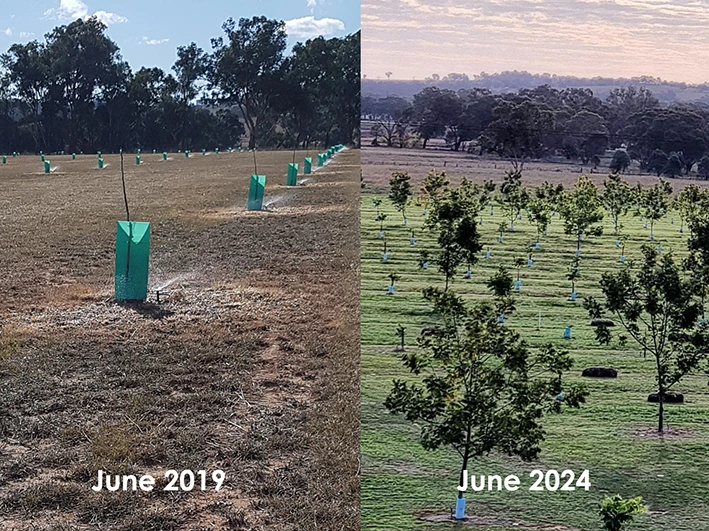
Key Outcomes
- Improved pasture performance and year-round ground cover.
- Healthier soil biology supporting long-term soil health.
- Reduced reliance on synthetic fertilisers through on-farm biofertiliser production.
- Lower fertiliser costs and reduced input storage requirements.
- Improved sheep condition through higher-quality pasture and seaweed supplementation.
- Successful application through foliar spraying, fertigation and boom spraying.
About The Farm
At their mixed farming operation near Mudgee, the focus has always been on producing healthy pastures, livestock and crops while reducing reliance on synthetic fertilisers.
After years of using conventional inputs, the family wanted to move back towards a more natural way of farming. They were looking for a practical system that supported soil health, livestock and plant growth without adding unnecessary chemical inputs.
For Wayne and Sue, producing fish and seaweed biofertiliser on the farm was a natural fit.
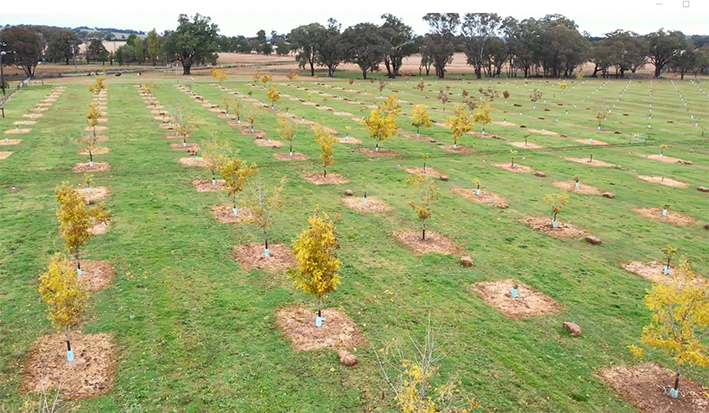
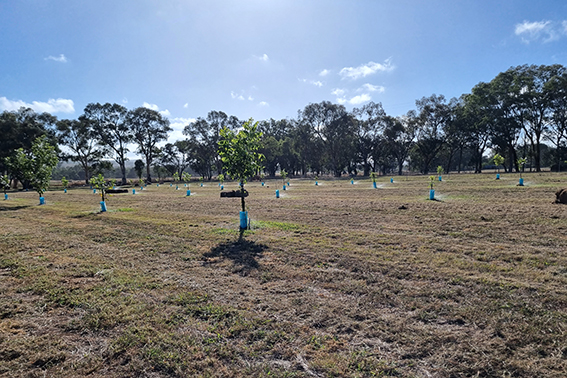
Pasture photo taken in 2023
The Challenge
Like many farmers, input costs continued to rise while long-term soil health became a growing concern.
The goal wasn’t simply to replace fertiliser. It was to improve the biology of the soil, build stronger pastures and produce healthier feed for livestock.
Storage and handling of bulk fertilisers was also becoming an issue.
“If we can improve the soil biology and the health of the plants, animals and ourselves, that’s the direction we want to go.”
The Approach
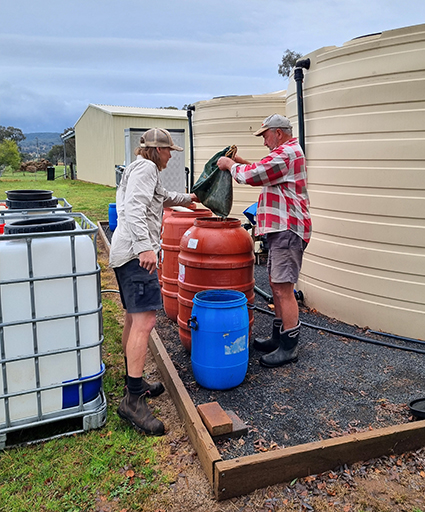
The farm now brews its own fish and seaweed biofertiliser on-site using 200-litre batches of seaweed and fish blended together throughout the year.
The system fits easily into normal farm operations.
A batch only takes a couple of hours to prepare, with enough product produced to cover the farm throughout the season.
The biofertiliser is used in several ways across the property:
- Foliar sprayed over orchard trees.
- Applied through the irrigation system.
- Boom sprayed across pastures.
- Added to livestock drinking water.
- Residual seaweed solids fed to sheep.
- Applied throughout the vegetable garden.
Despite initial concerns, the liquid has flowed cleanly through spray equipment without blocking nozzles.
“We often get asked why our paddocks are still green when everyone else’s are brown.”
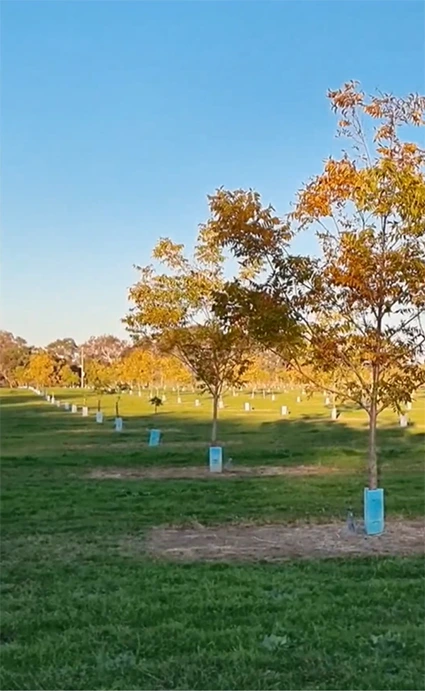
Wayne and Sue apply liquid fish and seaweed biofertiliser as a foliar spray and through the irrigation system, June 2024.
“We’ve only been using it for about twelve months and we’re already seeing improvements. In another few years, we think the difference will be even greater.”
Results Observed
One of the first noticeable changes was pasture performance.
After applying the fish and seaweed biofertiliser across the property and receiving around 15-20mm of rain a few days later, the pastures responded strongly.
While neighbouring paddocks showed the effects of frost, their paddocks remained green and actively growing.
Grasses, clovers and broadleaf species thickened across the pasture, providing more feed for livestock and improving grazing quality.
The vegetable garden also produced larger harvests than expected, with enough potatoes, pumpkins, beans and melons to share with neighbours.
Livestock Performance
Livestock condition has continued to improve as pasture quality has increased.
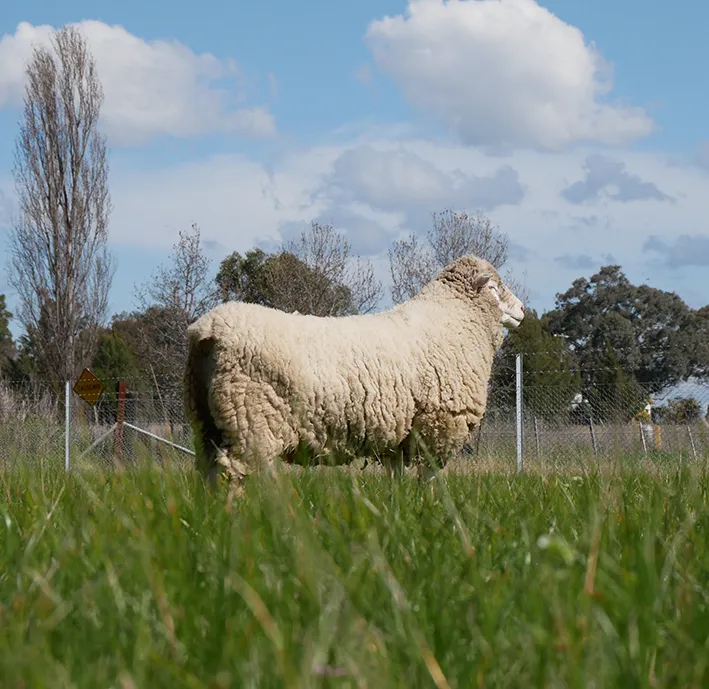
The sheep are maintaining good body condition under rotational grazing, supported by healthier pasture and seaweed supplements in their drinking water.
“The Sheep are Fat”
Reduced Farm Costs
A major objective of the transition was reducing reliance on expensive external inputs.
The farm achieved this through:
• Lower nitrogen application rates
• Increased nutrient cycling
• On-farm biological fertiliser production
• Reduced livestock supplement costs through on-farm liquid seaweed production
Producing biofertiliser on the farm has reduced reliance on purchased fertilisers while lowering storage requirements and input costs.
“It’s simple to make, easy to use and it fits into what we’re already doing.”
Instead of storing bulk bags of fertiliser, the farm now brews what it needs throughout the year using a relatively small amount of equipment.
The system has also proven to be straightforward to manage.
“It’s natural, it’s cost-effective and it works. We wouldn’t hesitate to recommend giving it a go.”
Case Study Summary
For Valley View Pecans, improving soil health has helped improve pasture performance, livestock condition and crop production while reducing input costs. Producing fish and seaweed biofertiliser on the farm has become a practical part of their farming system, supporting healthier soils and building greater farm resilience for the future. For Wayne and Sue, they now believe the greatest value comes from steadily improving soil health over time rather than chasing quick results.
Follow Real Farm Results

Join a growing community of Australian farmers improving soil health, pasture performance and farm resilience through natural farming systems. Get the latest updates and new case studies delivered to your inbox each season — free.