
Biofertiliser Solutions and Livestock Supplements
Get your SONIC Liquid Fish and Seaweed Biofertilisers and Livestock Supplements made-to-order and delivered, or make them yourself on-farm using our proven method and 1:1 training.
MADE-TO-ORDER PRODUCTS
We make your liquid fish and seaweed biofertiliser and deliver it to your farm.

Product Price Range:
$2.30-3.90/L
Includes: Finished liquid concentrate product, ready to dilute and apply.
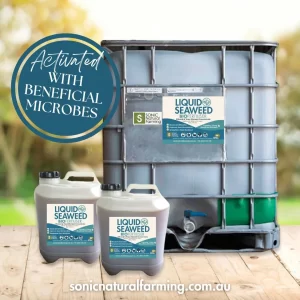
Size Options: 180L (20L Drums) or 1,000L IBC per product
Freight: Quoted separately for delivery to your farm.
Made to Order: Please allow approximately 10–12 weeks from order confirmation to dispatch. Lead times may vary depending on current production schedules and availability.
*Indicative AUD. Your quote confirms the total cost, GST, freight and inclusions.
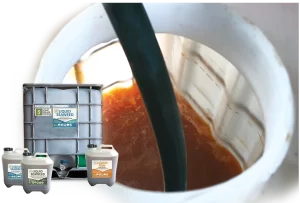
ON-FARM PRODUCTION & TRAINING
You make your liquid fish and seaweed biofertiliser with our production system and guidance.

First Batch (Starter Package):
$1.80-3.50/L
Includes: First batch raw ingredients, assisted setup, 1:1 training, dedicated support over three batches, plus ongoing phone and email support.
Initial Investment: Varies according to system size and production requirements. A tailored quotation will confirm your setup costs and inclusions.
Every Batch After:
$1.00-1.20/L
Ongoing Production: Purchase the raw ingredients needed for each additional batch, with no recurring training/setup fee.
*Indicative AUD. Your quote confirms the total cost, GST, freight and inclusions.
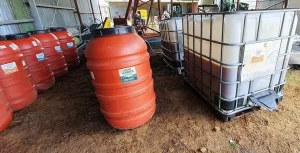


Product Storage
SONIC Biological Products contain no artificial additives or preservatives.
Use within three months of the packaging date, which marks the completion of the batch. Follow the storage instructions and best-before date on the container. Keep out of direct sunlight.
Biological Products should not be stored in a diluted form.
The rates suggested are general, and will vary according to your soil health, land management practices and stock condition. See Rates and Methods
If you would like to discuss biofertilisers as an option for your farm, contact us.
FAQs
SONIC Biofertiliser Solutions FAQs
SONIC Liquid Fish and Seaweed Biological Fertilisers feed both your plants and your soil, so you get short-term growth support and long-term gains in soil health.
Farmers typically use them to:
- Give plants fast-available nutrients
- Feed and stimulate beneficial soil microbes
- Improve nutrient cycling in the soil
- Strengthen root development and crop resilience
- Build soil structure and long-term fertility
Fish is rich in organic nitrogen and amino acids that drive growth. Seaweed adds trace elements and natural plant compounds that help crops handle stress. Used together, they can cover both what your plants need now and what your soil needs long-term.
See it on a real farm: Simon’s Pasture Improvement Journey →
Read article Top 3 Strategies To Get The Most From Your Biological Fertilisers
It mainly comes down to how much liquid fish and seaweed you use and how hands-on you want to be.
Made-to-order is the better fit if you:
- Use smaller volumes, or are trying biofertiliser for the first time
- Want a finished product delivered, ready to dilute and apply
- Don’t have the time or space to run your own batches
Our liquid fish and seaweed is made-to-order, priced by volume – $2.30–3.90/L, with a 180L minimum per product.
Making your own is the better fit if you:
- Want the lowest cost per litre (from $1.00–1.20/L after your first batch training)
- Want to cut freight costs and rely less on outside supply
- Like the idea of producing fresh biological products on your own farm
Starter packages start from $1,885 for a 540L system, with 1:1 training and VIP support through your first three batches.
Not sure? Book a free strategy call and we’ll help you work out which option saves you more.
Book a free strategy call → | Calculate Your Biofertiliser Usage →
Yes. SONIC biofertilisers are 100% natural and can be added to most farming programs, whether you’re fully regenerative or just starting to cut back on synthetic inputs.
Works well with:
- Other natural inputs, such as compost, manures, biodynamic preparations and natural amendments
- Seed treatments, soil drenches and foliar sprays
- Regenerative management practices
Keep separate from:
- Synthetic fertilisers, urea and chemical-based products. Mixing them in the same tank reduces the benefit, because these products can harm the beneficial microbes in your biofertiliser.
Yes. We supply farms across most regions of Australia, from our base in Dorrigo, NSW and Central Coast, NSW.
Made-to-Order Biofertiliser:
Freight is quoted to your farm based on your location and order size. Because you’re shipping finished liquid, freight can be a big part of the total cost, especially for remote farms or large volumes.
DIY Biofertiliser Systems:
We ship dried raw ingredients rather than liquid, which is much lighter and cheaper to freight. Containers and pumps can usually be bought locally, and training can be done by live video, so wherever your farm is, you can get started.
Your quote will confirm freight costs and delivery timing for your area.
Questions?

Refined on Australian Farms Since 2011


