
Rates and Methods
SONIC Biological Fertilisers and Livestock Supplements are liquid mineral concentrates designed for easy, safe, and versatile use on seeds, soil, foliage, and animals.
Whether applied through a watering can, spray pack, fertigation system, boom spray, or trickle irrigation, SONIC Biofertilisers seamlessly integrate into any fertilisation routine.

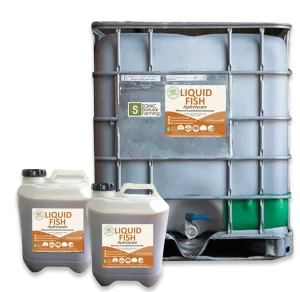
SONIC LIQUID FISH
Hydrolysate Biofertiliser
Liquid Fish Hydrolysate helps stimulate microbial and fungal activity providing numerous plant and soil health benefits. Apply as a foliar feed or soil drench.
FISH HYDROLYSATE IS BEST USED FOR:
Particularly effective for crops that are nutrient-hungry or need a quick boost during growth stages. It’s also great for replenishing soil that may have been depleted of essential nutrients over time.
If you’re looking to enhance root development and stimulate strong, healthy plant growth, liquid fish hydrolysate – biofertiliser is an excellent choice.
SONIC Liquid Fish is a fermented biological soil amendment used to support soil microbial activity, and contains microbially balanced levels of organic mineral nutrients.
SONIC Liquid Fish Biofertiliser – Suggested Application Rates
| Crop / System | Typical Rate (L/ha) or Dilution | Typical Frequency | Use Context |
|---|---|---|---|
| Seedlings / microgreens | 1:100 – 1:200 dilution | Weekly to fortnightly | Nutritional support for early growth (amino acids + nitrogen) |
| Cover crops | 2 – 5 L/ha | 1–2 times, at establishment and early growth | Biomass production and early vegetative growth |
| Vegetables | 2 – 6 L/ha | Weekly to fortnightly in early growth; fortnightly to monthly once established | Nutrient-driven growth and yield formation |
| Turf / lawns | 3 – 6 L/ha | Monthly in the growing season, and after mowing or stress | Greening response and recovery from stress or mowing |
| Vines (grapes, etc.) | 3 – 6 L/ha | 3 or more times per season, during vegetative growth and fruit development | Fruit development and vegetative growth support |
| Fruit & nut trees | 4 – 8 L/ha | 3 or more times per year, during canopy growth and fruit fill | Nitrogen + amino acid support for canopy and fruit fill |
| Broadacre crops | 2 – 6 L/ha | At establishment, then 1–2 times during the season | Biomass production and establishment support |
| Fertigation systems | 1 – 5 L/ha (system equivalent via irrigation) | Weekly to fortnightly, with regular irrigation | Continuous low-dose nutrition via irrigation |
| Grazing / pasture systems | 3 – 8 L/ha | 3 or more times per year, ideally after grazing | Post-grazing recovery and protein/biomass response |
SONIC Liquid Fish Biofertiliser is an all-natural mineral concentrate that should be diluted before use. Suitable for seed inoculation, root soak prior to transplanting, foliar application, or soil drench.
Spray Water Volumes
The following spray water volumes are provided as a general guide. Actual water rates may vary depending on crop type, canopy density, spray equipment, nozzle selection, and the level of coverage required.
50–80 L/ha – Low-volume boom spraying where crop coverage requirements are modest.
80–120 L/ha – The most common range for applying liquid fertilisers, foliar nutrients, and biofertilisers in broadacre farming.
100 L/ha – A practical standard calibration rate for most boom sprayers, providing excellent coverage while maintaining efficient field capacity. This is the recommended general spray volume for Liquid Fish Biofertiliser.
150–200+ L/ha – Recommended where increased coverage is required, such as dense crop canopies, pasture, horticultural crops, or when targeting difficult-to-wet foliage.
Application Strength: Use the lower application rates shown in the table for seedlings, young plants, fertile soils, or frequent applications. Use the higher rates for established crops, pasture, periods of rapid growth, or where greater biological and nutritional input is required.
These water volumes refer to the carrier water used to apply the product. Always apply the recommended product rate per hectare shown in the table above and adjust the carrier water volume as required to achieve thorough, even coverage.
Application Conditions: Apply during cool conditions, preferably in the early morning, late afternoon, or on overcast days. Avoid spraying during the heat of the day or when temperatures exceed 27°C.
Note: Rates and frequencies are a general guide and will vary with soil condition, season and crop stage. Apply more often during the first one to three years, or when transitioning from synthetic fertilisers.
Grazing: Liquid Fish Hydrolysate contains fish-derived material, classed as restricted animal material (RAM) under Australia’s ruminant feed ban. Keep cattle, sheep, goats and other ruminants off treated pasture until the product has been absorbed and the pasture has regrown.
Estimate Your Usage


SONIC LIQUID SEAWEED
(Kelp) Biofertiliser
Liquid Seaweed Biological Fertiliser activates soil microbial activity providing excellent plant & soil health benefits. Use as a foliar spray or soil drench.
SEAWEED BIOFERTILISER IS BEST USED FOR:
Ideal if you’re looking to increase plant resilience to environmental stress, or to improve soil health and boost the overall quality of your crops. Use Liquid Seaweed during stressful growing periods like seed striking, early growth, through droughts, hot spells, or during transplantation, or pests and disease events.
SONIC Liquid Seaweed is a fermented biological soil amendment used to support soil microbial activity and deliver microbially balanced levels of organic mineral nutrients.
SONIC Liquid Seaweed Biofertiliser – Suggested Application Rates
| Crop / System | Typical Rate (L/ha) or Dilution | Typical Frequency | Use Context |
|---|---|---|---|
| Seed inoculation | 1:80 – 1:150 dilution | Once, before sowing or transplanting | Light hormonal coating to trigger germination and early root signalling |
| Seedlings / microgreens | 1:100 – 1:200 dilution | Weekly to fortnightly | Gentle biostimulation for establishment and root development |
| Cover crops | 2 – 5 L/ha | 1–2 times, at establishment and early growth | Establishment and early biomass development |
| Vegetables | 3 – 8 L/ha | Weekly to fortnightly in early growth; fortnightly to monthly once established | Growth regulation, stress tolerance, yield support |
| Turf / lawns | 3 – 10 L/ha | Monthly in the growing season, and after mowing or stress | Colour, density, and recovery after mowing or stress |
| Vines (grapes, etc.) | 4 – 8 L/ha | 3 or more times per season, at key stages such as flowering and fruit set | Fruit set, flowering support, and stress buffering |
| Fruit & nut trees | 5 – 10 L/ha | 3 or more times per year, at key stages such as flowering and fruit development | Canopy health, flowering, and fruit development |
| Broadacre crops | 2 – 6 L/ha | At establishment, then 1–2 times during the season | Cost-efficient growth support and establishment |
| Fertigation systems | 1 – 5 L/ha (system equivalent via irrigation) | Weekly to fortnightly, with regular irrigation | Continuous low-dose signalling through irrigation |
| Grazing / pasture systems | 3 – 8 L/ha | 3 or more times per year, ideally after grazing | Post-grazing recovery and pasture biological activity |
SONIC Liquid Seaweed Biofertiliser is an all-natural mineral concentrate that should be diluted before use. Suitable for seed inoculation, root soak prior to transplanting, foliar application, or soil drench.
Spray Water Volumes
The following spray water volumes are provided as a general guide. Actual water rates may vary depending on crop type, canopy density, spray equipment, nozzle selection, and the level of coverage required.
50–80 L/ha – Low-volume boom spraying where crop coverage requirements are modest.
80–120 L/ha – The most common range for applying liquid fertilisers, foliar nutrients, and biofertilisers in broadacre farming.
100 L/ha – A practical standard calibration rate for most boom sprayers, providing excellent coverage while maintaining efficient field capacity. This is the recommended general spray volume for Liquid Seaweed Biofertilisers.
150–200+ L/ha – Recommended where increased coverage is required, such as dense crop canopies, pasture, horticultural crops, or when targeting difficult-to-wet foliage.
Application Strength: Use the lower application rates shown in the table for seedlings, young plants, fertile soils, or frequent applications. Use the higher rates for established crops, pasture, periods of rapid growth, or where greater biological and nutritional input is required.
These water volumes refer to the carrier water used to apply the product. Always apply the recommended product rate per hectare shown in the table above and adjust the carrier water volume as required to achieve thorough, even coverage.
Application Conditions: Apply during cool conditions, preferably in the early morning, late afternoon, or on overcast days. Avoid spraying during the heat of the day or when temperatures exceed 27°C.
Note: Rates and frequencies are a general guide and will vary with soil condition, season and crop stage. Apply more often during the first one to three years, or when transitioning from synthetic fertilisers.

Biological Fertiliser Uses
- Seed Treatment – Boost Germination
Use biological fertilisers as an inoculant to coat seeds with beneficial microbes and minerals prior to seeding. Biofertilisers can also be used as a root pre-soak prior to transplanting, to minimise transplant shock and promote strong, healthy growth.
Read Article Biological Seed Treatment: Benefits and Methods
- Foliar Feed – Crop Vitality
When applying biological fertilisers as a foliar feed treatment, nutrients are absorbed directly through the leaves, allowing for quick uptake and immediate effects on plant health and growth.
Read Article – The 7 Most Cost-Effective Soil Regeneration Strategies, Australia
- Soil Drench – Microbial Diversity
Using liquid fish and seaweed biofertilisers as a soil drench will add organic minerals and stimulate beneficial microbes in the soil. As microbial activities increase, soil structure improves, water-holding capacity is enhanced, and nutrient cycling becomes more efficient.
Read Article – Top 3 Strategies To Get The Most From Your Biological Fertilisers

Biofertiliser Spraying
Liquid biofertilisers offer a flexible and efficient way to deliver essential nutrients directly to your crops.
Mixing Preparation
Start by filling your spray tank or mixing container with water before adding the biofertilisers, to prevent foam buildup. Once mixed, use the solution within 48 hours, and do not store in diluted form.
Spray Equipment
Suitable spray equipment includes; Boom sprayers, Airblast sprayers, Tractor-mounted sprayers, Aerial sprayers (drones and aircraft), and Fertigation systems.
For optimal performance, use larger nozzle and screen sizes, or even no screens at all. Lower spray pressures (ideally below 55 psi) are recommended when applying biological products. After use, be sure to rinse out your tanks and flush the lines to prevent residue buildup.
Calculate Your Biofertiliser Usage
FAQs
Biological Fertiliser FAQs
Conventional synthetic fertilisers are designed to deliver nutrients rapidly, creating fast and predictable plant responses. When nitrogen, phosphorus, and potassium are applied in synthetic forms, plants often respond with quick greening and a surge in biomass.
Biological fertilisers, on the other hand, work in a fundamentally different way to conventional synthetic inputs. Rather than supplying nutrients in a readily available chemical form, they focus on supporting the living processes within the soil that naturally create fertility over time.
Read article Rethinking Soil Fertility: The True Meaning of Fertiliser
Liquid seaweed extracts, such as Seasol, are usually produced using chemical or heat extraction to concentrate certain compounds. While these products are widely used, the process can reduce some of the natural components of the seaweed. Seaweed biofertiliser, on the other hand, is cold fermented, preserving a wider range of nutrients and natural compounds in a form that supports soil biology and plant uptake.
Read Article – Liquid Seaweed Fertiliser Comparison: Ferment Vs Extract
We service all regions across Australia for both product supply and on-farm production systems. Fresh processed biological fertilisers are delivered nationwide.
For on-farm systems and training, we work with both local and remote operations. Where in-person visits aren’t practical, we provide live video training and guided setup to ensure you can confidently get your system up and running without a hitch.
We source both fresh and dried fish waste, generated after processing for human consumption, from a network of fish shops and processors handling ocean-caught fish across Australia. By utilising these by-products, we help divert organic waste from landfill and repurpose it into valuable liquid fish hydrolysate biological fertiliser.
Read article Turning Fish Waste Into Premium Hydrolysate Fertiliser

SONIC LIQUID SEAWEED
Livestock Feed Supplement
Liquid Seaweed 100% natural liquid mineral concentrate is suitable for all farm animals, including cattle, sheep, horses, goats, alpacas, pigs and poultry.
How To Use:
Add supplement to water trough, diluted at a typical ratio of 1:5 – 1:50, or directly to feed.
Administer weekly or fortnightly. Additionally, spray it on dry feed, mix it with grain, or add it to natural mineral lick blocks.
*Note: once diluted use within 2-3 days. Enable access to fresh water.
Do not store in diluted form and keep away from direct sun.
Livestock Supplement Suggested Rates
| Use | Mixing rate |
|---|---|
| Stronger mix | 1 part supplement to 5 parts water |
| Maintenance mix | 1 part supplement to 20 parts water |
| More dilute mix for more frequent use | 1 part supplement to 50 parts water |
Offer free-choice in a separate container, with fresh, untreated drinking water available at all times. Prepare only enough diluted supplement to be consumed within three days.
*Rates and frequencies are a general guide and will vary with feed quality, season and stock condition.
FAQs
Liquid Seaweed for Livestock FAQs
It is suitable for a wide range of farm animals, including cattle, sheep, goats, alpacas, horses, pigs and poultry.
It can be used as a regular part of the diet, or during periods of higher nutritional demand, such as when feed quality is poor or around calving, foaling and lambing.
Read article Kelp Supplements for Livestock: Why Australian Farmers Use Them
There are several ways to include it in your livestock’s diet:
In drinking water: Add to water troughs at a dilution of 1:5 to 1:50.
In feed: Add directly to feed, spray onto dry feed, or mix with grain.
As a grain soak: Dilute and use to soak grain before feeding.
In lick blocks: Add to natural mineral lick blocks.
Once diluted, use within two to three days, and don’t store the product in diluted form. Keep it out of direct sun, and make sure animals also have access to fresh, untreated water.
Read article Kelp Supplements for Livestock: Why Australian Farmers Use Them
Most farmers give it weekly or fortnightly at the standard dilution of 1:20 to 1:50, added to water troughs or feed. Frequency can be adjusted to suit your conditions:
Regular use: Weekly or fortnightly, as an ongoing part of the diet.
Higher-demand periods: During dry seasons, when feed quality is poor, or in late pregnancy and around calving, foaling and lambing, keep to a regular weekly or fortnightly routine.
Good feed conditions: When pasture and feed quality are good, some farmers reduce to monthly or a few times a year.
It is a naturally cold-fermented liquid kelp supplement containing naturally occurring kelp compounds, such as alginates and fucoidans, along with minerals and the beneficial microbes produced during fermentation. This makes it a natural direct-fed microbial (DFM).
Kelp has a long history of use as a livestock feed ingredient, and many farmers add it to the diet as a natural source of minerals, particularly when feed quality is poor.
This Liquid Seaweed analysis shows its mineral content and microbial counts from previous testing.
Read article The Role of Livestock Digestion in Feed Cost Management
Product Storage
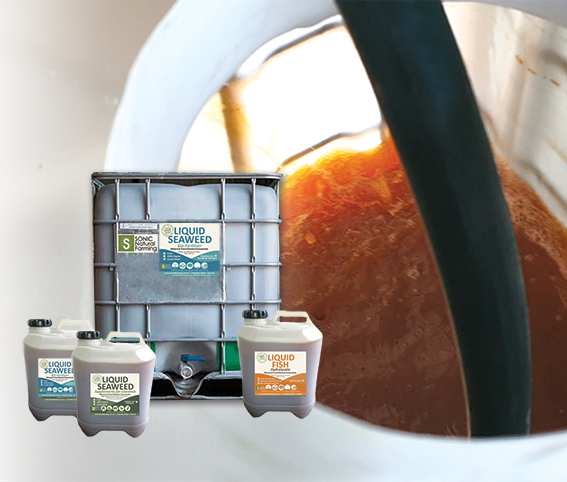
SONIC Biological Products contain no artificial additives or preservatives. This helps maintain strong microbial activity and ensures the full range of biological benefits remains available at application.
Biological Products should not be stored in a diluted form. The rates suggested are general, and will vary according to your soil health, land management practices and stock condition.
If you would like to discuss biofertilisers as an option on your farm, contact us.
Give Your Soil, Crops and Livestock a Real Treat
FAQs
Biofertiliser Rates and Methods FAQs
SONIC Liquid Seaweed: no withholding period. SONIC Liquid Seaweed is plant-based and can be consumed by livestock, either while grazing treated pasture or added to drinking troughs. It is the base of the SONIC Liquid Seaweed Livestock Feed Supplement, providing naturally occurring kelp compounds and beneficial microbes as part of a livestock nutrition program.
SONIC Liquid Fish Biofertiliser: use your judgement for ruminants. Because it contains fish, it is classed as restricted animal material (RAM) under Australia’s ruminant feed ban. Cattle, sheep, goats and other ruminants shouldn’t graze treated pasture until the fertiliser has been absorbed. How long that takes depends on rainfall and pasture growth. Queensland Government guidance suggests around three weeks is generally enough. Pigs and poultry are not covered by the ruminant feed ban.
Yes. SONIC Biofertilisers can be applied through standard spray and irrigation equipment, including boom sprayers, airblast sprayers, tractor-mounted units, drones and fertigation systems.
Mixing: Fill the tank with water first, then add the product to reduce foaming. Use the mix within 48 hours, and don’t store diluted product.
Protecting the microbes: The products are liquids that generally pass through fine spray and irrigation systems without clogging. To keep the beneficial microbes active, use larger nozzles and coarser screens where possible, and keep spray pressure below 55 psi.
Biofertilisers generally work best applied at lower rates more often, rather than in one or two large applications. Regular applications keep feeding soil microbes through the season.
Grazing pastures: Apply three or more times per year. Applying after grazing helps support pasture recovery.
Orchards and vines: Apply three or more times per year, timed around key growth stages such as flowering, fruit set and fruit development.
Small mixed crops and seedlings: Apply weekly or fortnightly during early growth, then fortnightly to monthly once plants are established.
Fertigation: Small, regular doses can be delivered through your irrigation system.
First one to three years, or moving away from synthetic fertilisers: Apply more often while soil biology builds up.
Choosing a rate: Use the lower end of the rate range when applying frequently, or for seedlings, young plants and fertile soils. Use the higher end for established crops, pasture and periods of rapid growth. For best results, apply in cool conditions, such as early morning, late afternoon or overcast days, and avoid spraying above 27°C.
See our Rates and Methods page for more information.
Yes. SONIC Biofertilisers contain living microorganisms, and microbial activity gradually declines after production. For best results, use the product within three months of its production date. The best-before date is printed on every container.
Freshness matters because the benefit of a biological fertiliser comes from those living microbes. When applied, they add beneficial microorganisms to the soil and can help stimulate existing soil life. This supports processes such as nutrient cycling and organic matter breakdown. The more active the microbes are at application, the better placed they are to establish in the soil.
SONIC Biofertilisers are supplied fresh and contain no preservatives or artificial additives, which is why they have a shorter shelf life than many conventional fertilisers.
