
When we talk about fertiliser today, most of the conversation quickly turns to products, NPK, and application rates. But the original meaning of the word ‘fertiliser’ points in a very different direction—one that’s worth revisiting, especially in the current conditions Australian farmers are facing.
The word ‘fertiliser’ comes from older language rooted in the Latin ‘fertilis’, meaning fruitful, productive, or able to bear crops or offspring. That Latin term itself comes from ‘ferre’, meaning to bear, carry, or produce.
In other words, the original idea wasn’t about a product at all. It was about the capacity of land to produce life and yield outcomes. Fertility was something the land either had—or didn’t have—and anything that improved that capacity was, by definition, ‘fertilising.’
Why Is Soil Biology Important For Soil Health?
Soil biology drives the breakdown of organic matter and the release of nutrients into plant-available forms. It also supports soil structure and plant resilience, making it a key part of long-term soil fertility.
Can You Improve Soil Health Without Synthetic Fertilisers?
Yes. Soil health can be improved without relying on synthetic fertilisers by increasing organic matter, supporting soil biology, and using inputs such as liquid fish and seaweed biofertilisers. These approaches help improve nutrient availability, soil structure, and long-term fertility by supporting natural nutrient cycling within the soil.

Fertility Isn’t Just a Word – It’s Your Land’s Lifeline
For Australian farming systems—whether grazing, cropping, or mixed enterprises—soil fertility is not an abstract concept. It is the foundation that underpins everything else such as pasture growth, crop performance, feed quality, nutrient-density, and long-term resilience through variable seasons.
Without functional soil fertility, inputs become more reactive and less efficient. With it, the system begins to carry more of its own weight.
This is where the original meaning of fertiliser becomes useful again. At its core, fertiliser was never just about adding nutrients—it was about making land more capable of producing.
When the English Word ‘Fertiliser’ Appeared
The English word ‘fertiliser (fertilizer)’ began appearing in the mid-17th century, around 1655–1661. It was formed from the word fertile, meaning productive or fruitful, combined with the suffix -ize (to make something become a certain way), and -er (something that performs an action).
Put simply, the word was built to describe “a thing that makes something fertile.”
At that time, the meaning was still closely tied to the original idea of improving the land’s ability to produce. Fertiliser wasn’t defined by a specific product or nutrient—it was defined by its outcome: increased productivity of the soil.
Biological Soil Function – Substituted
Over time, as agriculture became more industrialised, the meaning gradually narrowed from this broad concept of ‘making land fertile’ into what most people understand today: a manufactured input applied to supply nutrients directly to plants.
That shift is important, because it subtly changed the focus from soil function and fertility as a system, to inputs and formulations as a substitute for that function.
Both approaches have played a role in modern farming, but they behave very differently in practice—particularly under changing input costs, supply uncertainty, and increasing pressure to improve efficiency per hectare.
Understanding that distinction is where the conversation around soil health and fertility becomes more important than the products themselves.
Fast Growth Vs Long-Term Soil Function
Modern synthetic (chemical) fertilisers are designed to deliver nutrients rapidly, creating fast and predictable plant responses. When nitrogen, phosphorus, and potassium are applied in synthetic forms, plants often respond with quick greening and a surge in biomass.
This response is one of the reasons synthetic fertilisers became so widely adopted. In the short term, they are highly efficient at pushing growth when moisture and conditions are right.
A fast growth response is not the same as building soil fertility
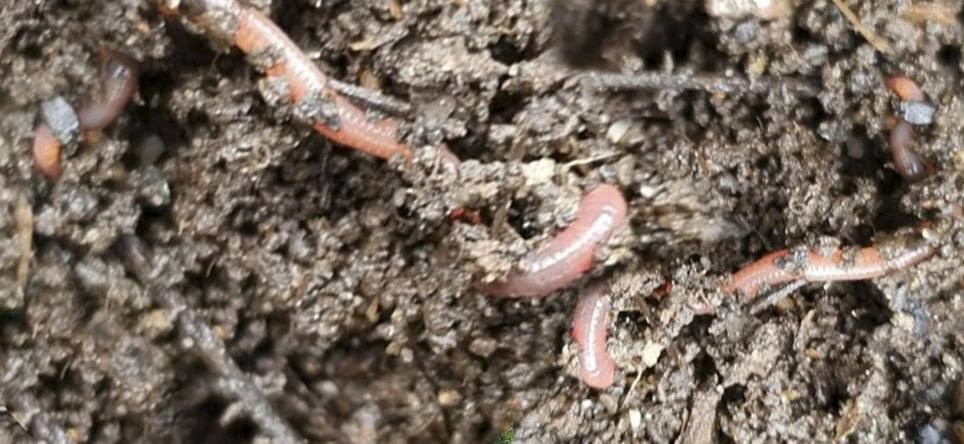
Soil is not just a holding medium for nutrients—it is a living system made up of bacteria, fungi, earthworms, organic matter, and complex biological interactions that regulate how nutrients are cycled and made available to plants.
Repeated reliance on synthetic (chemical) inputs can gradually shift that system.
Because nutrients are supplied in immediately available forms, plants rely less on the soil’s biological processes to access nutrition. Over time, this can reduce the plant’s need to interact with microbial partners that normally drive nutrient cycling.
The Input Trap
In simple terms, the system becomes more dependent on external inputs and less dependent on internal biological function.
This doesn’t mean synthetic fertilisers stop working—they often continue to produce strong short-term growth responses. But the underlying soil system may not be improving in step with that production.
The result is a familiar pattern in many farming systems, of strong immediate yield responses, but increasing reliance on inputs to maintain that response over time.
Understanding this trade-off is key to the broader discussion around soil fertility—because true fertility is not just about how fast a plant can grow today, but how well the soil continues to support production in the seasons ahead.
What Makes Biofertilisers Different?
Biological fertilisers work in a fundamentally different way to conventional synthetic inputs. Rather than supplying nutrients in a readily available chemical form, they focus on supporting the living processes within the soil that naturally create fertility over time.
At the centre of this approach are beneficial microbes—bacteria, fungi, and other soil organisms—that help drive the cycles that plants depend on. These microbes don’t just sit in the soil; they actively interact with plant roots, organic matter, and minerals to improve how nutrients are accessed and used.
When these biological systems are functioning well, they help:
- Enhance nutrient cycling, making nutrients already in the soil more available to plants over time
- Support plant health, through improved root function and natural plant-soil interactions
- Improve water retention, as healthier soil structure allows better infiltration and moisture holding capacity
Instead of acting as a direct feed to the plant, biological fertilisers work more like a catalyst—helping the soil system perform the work it is already capable of doing, but more efficiently.

Fertile Soil = Healthy Crops
The long-term performance of any farming system is closely linked to the health of its soil biology. When soil life is active and diverse, it creates a more resilient and self-regulating system—one that is better able to buffer stress, respond to extreme weather events, and maintain nutrient availability across changing conditions.
Healthy soil biology supports:
- more stable plant growth over time
- improved nutrient use efficiency
- better recovery after grazing, harvest, or stress periods
This is where the concept of fertility becomes important again in its original sense—not just supplying inputs to force growth, but building a soil system that is inherently capable of producing year after year.
In this way, fertile soil is not defined by what is added to it, but by what it is able to do on its own.
Related Videos
Disclaimer:
The information in this article is for general guidance and not professional advice—always consider your individual circumstances or consult with a professional before making decisions. For more details, please review our full Disclaimer.

Slash Liquid Fertiliser Shipping Costs