

Soil microbes play a vital role in driving crop performance, enhancing nutrient availability, and supporting long-term soil health. Even when conditions aren’t perfect, these microscopic organisms quietly influence the soil’s ecosystem. By nurturing them year-round, you’re not just maintaining soil health—you’re setting the stage for better crop resilience and sustained productivity.
Ideal Conditions for Soil Microbes
Just like humans, soil microbes thrive when their basic needs are met. To keep them healthy and active, it’s essential to provide them with the right food, shelter, and water. These conditions help them function at their best, ensuring optimal soil health and crop performance. Here’s what you need to know to create the ideal environment for your soil microbes:
Food – Microbes rely on organic matter for nutrition, including crop residues, compost, root exudates, and organic fertilisers like liquid fish hydrolysate and seaweed biofertiliser. Without a steady supply of fresh inputs, microbial populations can dwindle, even if other conditions are favourable.
Shelter – Cover crops and mulch serve as essential “shelter” for soil microbes. They provide physical protection from extreme temperatures and help maintain soil structure. These organic materials also contribute to moisture retention, keeping the soil environment stable and conducive to microbial life.
Water – Microbes need water to survive and function properly. Ideal conditions are consistently moist (but not waterlogged) soils. Cover crops and mulch play a critical role in maintaining moisture levels by reducing evaporation, which helps keep the soil hydrated and supports microbial activity. During dry or drought conditions, microbial activity can slow, causing microbes to go dormant.
By creating a balanced environment that supports these conditions, you can help maintain a thriving microbial community that will work year-round to improve your soil’s fertility and crop resilience.
When are Conditions Not ideal for Soil Microbes in Australia?
Hot, dry summers – Heat and lack of moisture means microbial slowdown.
Cold winters – Lower soil temperatures or frost can reduce microbial activity.
Flooding or soil compaction – Waterlogging means low oxygen which sets up conditions for poor microbial function.
Intensive tillage or chemical stress – These can disrupt microbial habitats.
Here’s a detailed look at why it pays to feed soil microbes all year round.
1. Microbial Activity Doesn’t Stop Just Because Conditions Are Harsh
Soil Life Slows — It Doesn’t Stop
It’s a common misconception that soil biology simply shuts down during drought or frost. In reality, while microbial activity slows, many soil microbes remain alive and functioning — particularly those adapted to stress, such as drought-tolerant bacteria and cold-hardy fungi.
Feed Microbes, Even When Crops Aren’t Growing
That’s why it’s important to feed soil microbes all year round, not just during the growing season. Even during extreme weather, applying biological inputs like liquid seaweed biofertiliser gives microbes access to essential organic compounds, polysaccharides, and trace elements that help them stay active and resilient.
Support Resilience, Recovery & Soil Function
By continuing to feed soil microbes, you support their survival, encourage microbial diversity, and help maintain critical soil functions like aggregation, moisture retention, and nutrient cycling — even when root activity is minimal.
When rainfall returns or soil temperatures rise, a “primed” microbial population rebounds much faster — accelerating nutrient availability and boosting plant response

2. Seaweed Contains Compounds that Feed Soil Microbes And Help Them Survive Stress
Seaweed – A Natural Powerhouse for Feeding Soil Microbes
One of the key reasons seaweed is such a powerful biological input is because it naturally contains compounds that feed soil microbes and help them persist in tough conditions — like drought, salinity, or cold spells.
Alginates and Polysaccharides – Food and Moisture for Microbes
Alginates and polysaccharides found in seaweed don’t just provide a carbon food source — they also act as moisture-holding agents. This helps microbes stay active and hydrated in dry, compacted soils, especially when root exudates are minimal.
Fermented Seaweed – Mimicking Root Exudates to Sustain Microbial Life
Fermented liquid seaweed releases organic acids, simple sugars, and dissolved carbon — all of which directly feed soil microbes, especially bacteria and fungi involved in nutrient cycling and decomposition. These compounds mimic the root exudates plants usually provide, helping maintain microbial populations even when plant activity is low.
Antioxidants and Enzymes – Supporting Microbial Stress Recovery
Seaweed also delivers antioxidants and enzymes that reduce microbial stress and support faster recovery once favourable conditions return. This means your soil biology isn’t just surviving — it’s primed to bounce back when rainfall arrives or temperatures rise.

3. Feed Soil Microbes to Prime Your Soil for Recovery
More Than Immediate Results — A Long-Term Investment
Feeding your soil biology isn’t just about quick wins — it’s a strategic investment in how well your paddocks recover after stress events like drought or frost.
Keep the Microbial Engine Idling
By feeding soil microbes during harsh periods, even at low rates, you prevent the microbial community from stalling completely. This “priming” effect means that when moisture returns or soil temperatures rise, microbes are already alive, active, and ready to respond.
Why It Matters in Australian Conditions
With unpredictable rainfall and soils swinging between extremes, a well-fed microbial population can respond faster. It kickstarts essential processes like nutrient cycling, organic matter breakdown, and root-microbe interactions — all vital for plant recovery and early growth.
How Fermented Liquid Seaweed Helps
Inputs like fermented liquid seaweed provide readily available carbon, enzymes, and trace minerals that directly feed soil microbes — even when root exudates are limited. This keeps core microbial functions running smoothly, eliminating lag time when conditions improve.
The Outcome: Soils That Bounce Back Faster
The result is healthier soils that recover quickly and crops or pastures that make the most of the first rain or warming weather — instead of waiting weeks for soil biology to restart.
A Smart Strategy for Tough Times
Feeding your soil microbes through challenging conditions is one of the smartest ways to ensure your land is ready to perform the moment nature turns in your favour.

4. Seaweed and Fish Supports Resilient Plants — and Helps Feed Soil Microbes When It Matters Most
Root Exudates Slow Down Under Stress
During drought, frost, or extreme heat, plants often reduce or stop producing root exudates — the sugars, amino acids, and organic compounds that normally feed soil microbes in the rhizosphere. This decline cuts off a major food source for microbial populations near the roots.
Liquid Seaweed Feeds Soil Microbes Directly
Applying liquid seaweed biological fertiliser and liquid fish hydrolysate helps fill that gap. It delivers organic carbon, polysaccharides, trace elements, and bioactive compounds that directly feed soil microbes — even when root exudation is low or absent.
Seaweed and Fish Can Extend or Speed Up Root Exudation Recovery
By improving plant stress tolerance through natural compounds like cytokinins and betaines, found in seaweed, can also help plants maintain or recover their root exudation patterns more quickly. This means microbes around the roots are more likely to continue receiving food sooner after a stress event.
Keep Soil Life Alive When Plants Can’t
Using seaweed and fish fertiliser products inputs during stress periods is a powerful strategy to feed soil microbes all year round — not just through the plant, but around it. By sustaining microbial activity when natural exudates aren’t available, you maintain soil function, nutrient cycling, and biological resilience, ready for when growing conditions improve.
Conclusion
Feeding soil microbes all year round isn’t just about maintaining biological activity — it’s about building long-term resilience into your farming system. Whether it’s keeping microbial life active during stress, priming soil for recovery, supporting plant-microbe interactions, or improving nutrient cycling, consistent biological inputs like liquid seaweed biofertiliser help keep your soil functioning, productive, and ready for whatever the season brings.
Disclaimer:
The information in this article is for general guidance and not professional advice—always consider your individual circumstances or consult with a professional before making decisions. For more details, please review our full Disclaimer.
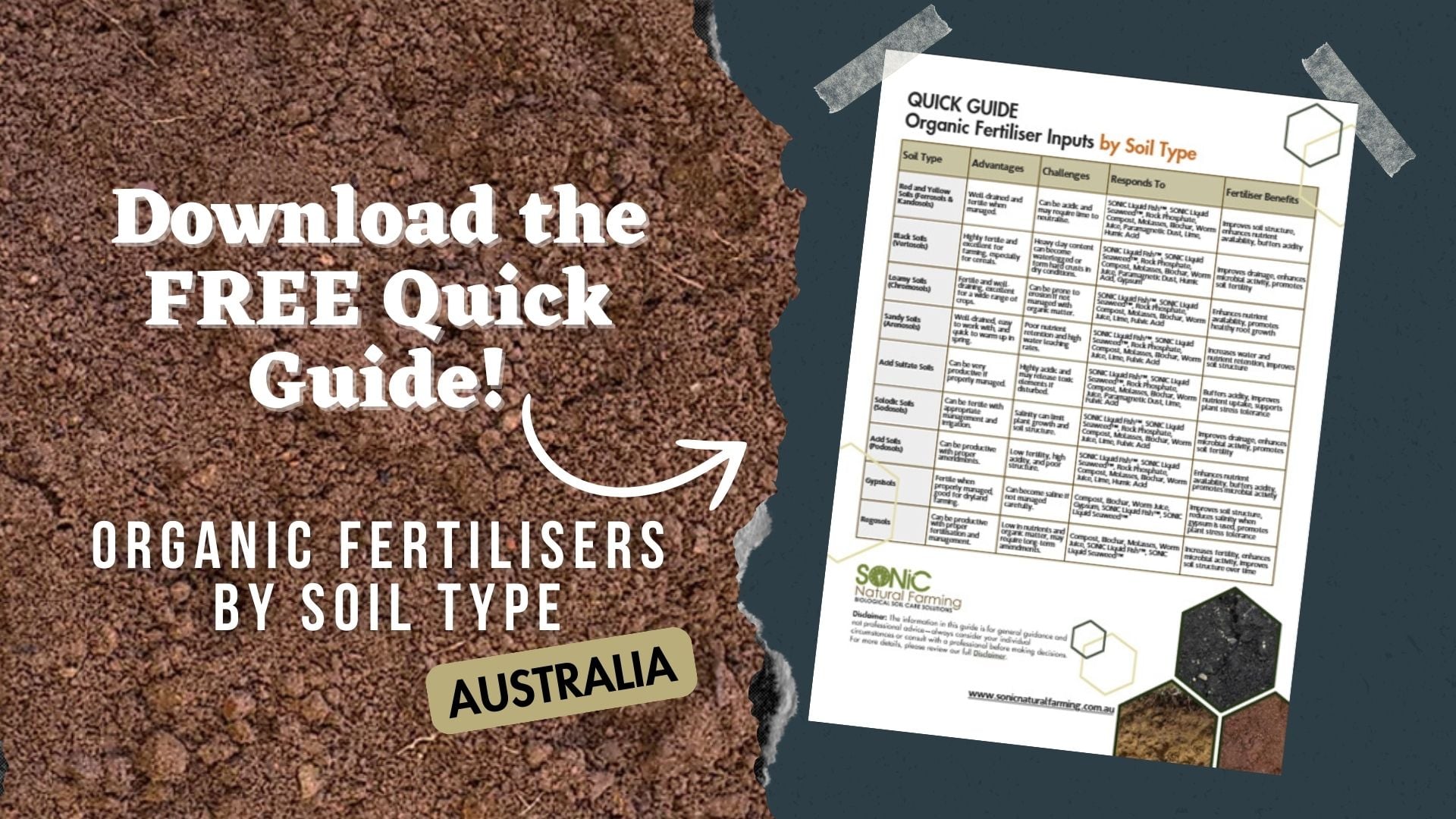
Unlock the potential of your land by tailoring organic fertilisers to suit your unique Aussie soil type. The right organic fertilisers—like compost, biochar, or liquid fish—can not only boost crop resilience, but also improve soil fertility and sustainability over time.
Discover some of the most popular natural organic fertilisers you can tailor to your soil. Download our ‘Organic Fertilisers by Soil Type – Quick Guide’ to get started!


Are You Still Buying Inputs You Could Be Making On Farm?