
Regenerative Farming Case Studies

Across Australia, farmers are improving soil health, pasture performance, livestock productivity, and overall farm resilience through practical management changes. These farm case studies document real on-farm experiences, observations, and outcomes over time, providing insights into how different farming systems perform under Australian conditions using regenerative farming practices.
What You’ll Find in These Farm Case Studies
- Soil Health – Changes in soil structure, biology, fertility and nutrient cycling.
- Pasture Performance – Pasture growth, ground cover and grazing outcomes.
- Livestock Outcomes – Animal health, condition and productivity observations.
- Farm Systems – Management changes, input use and operational improvements.
- Farmer Perspectives – First-hand experiences and practical lessons learned.
- Long-Term Observations – Changes documented over multiple seasons and years.
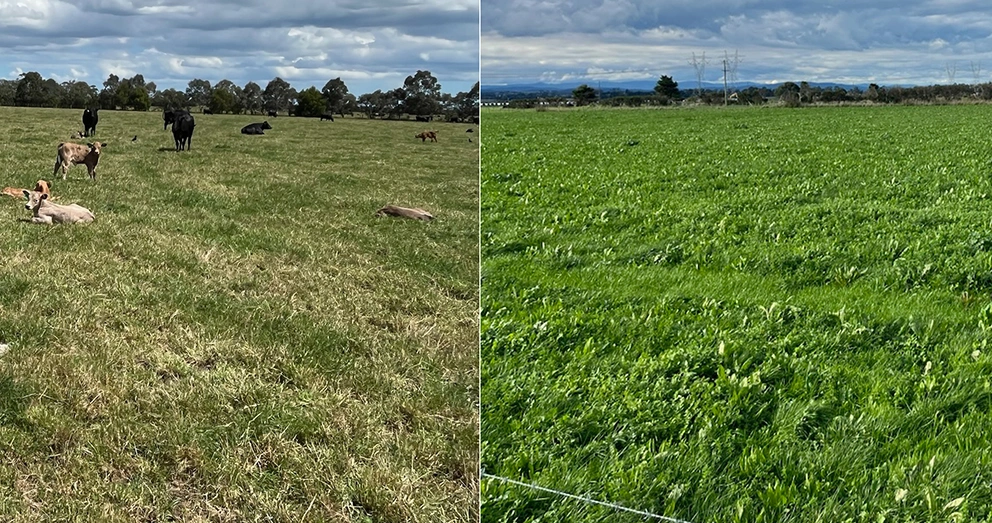
Documented On-Farm Observations
Unlike short-term trials or theoretical discussions, these Australian Farmer Journeys document what farmers observe on their own land over time.
Each story combines video interviews, farm observations, management changes and practical outcomes to create a detailed picture of farm system development using regenerative farming practices under real Australian conditions.

Troy and Deb’s Soil Building Journey
Beef Cattle Farm
Bellingen, NSW, Australia
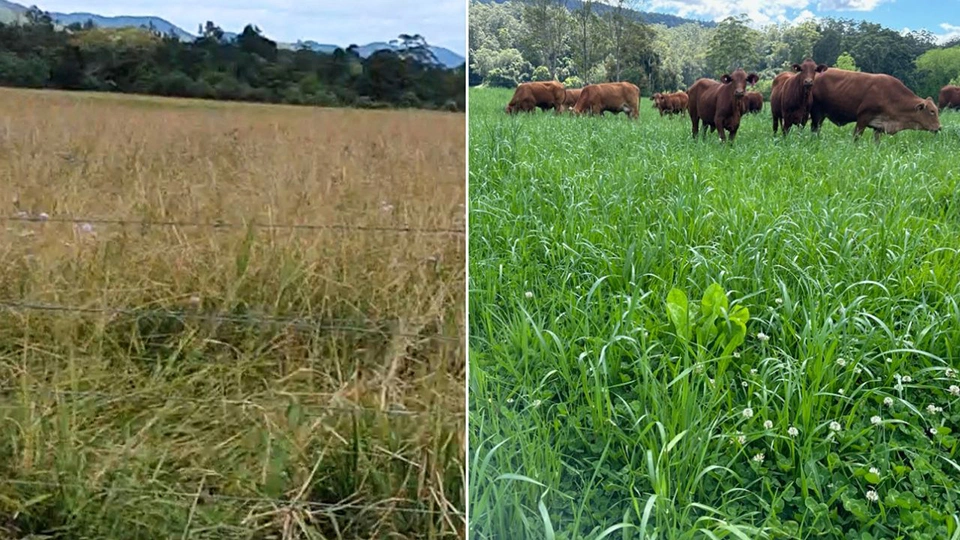
The Bellingen property initially had significant challenges including extensive Parramatta grass infestations and poor soil biological activity.
Since 2024, Troy and Deb have adopted a regenerative farming approach focused on rebuilding soil biology, improving pasture performance and supporting livestock health through biological farming practices.
Yeah, this is actually having a pretty good effect here.
Simon’s Pasture Improvement Journey
Meat Me At The Gate
Officer South, VIC, Australia
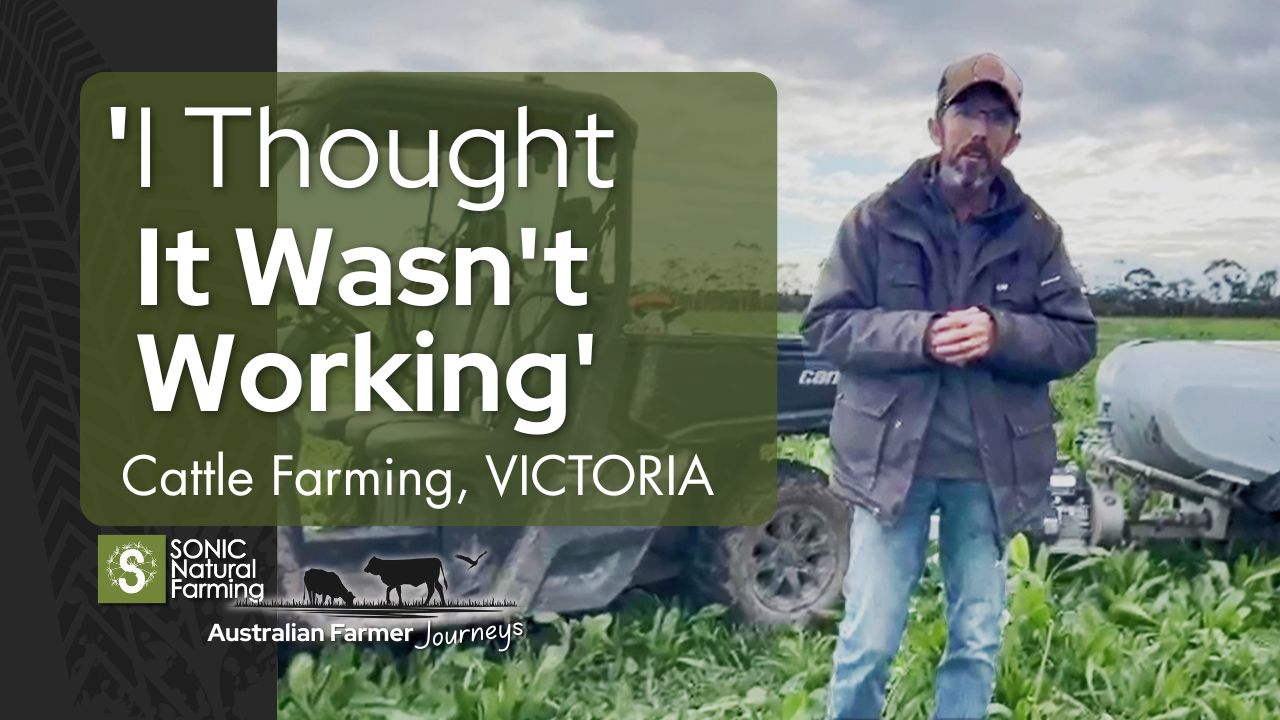
The Beard family’s beef cattle farm combines livestock production with fodder production, including hay, silage and multispecies forage crops to support year-round feed availability.
Like many Australian beef producers, the business faced increasing pressure from rising input costs and declining responses to traditional fertiliser programs.
“My surprising one was the animal benefit that I saw.”
Valley View Pecans
Cooyal, NSW, Australia
Wayne and his wife Sue, were looking for a way to get back to the ‘natural way’ of farming on their 16ha pecan property. After 12 months of brewing their own liquid fish hydrolysate and seaweed biofertilisers, the results are hard to ignore.
From ‘very fat’ sheep and better-tasting meat to pastures that stay lush and green while the neighbours’ ground burns off—this is a genuine look at the transition to biological farming.
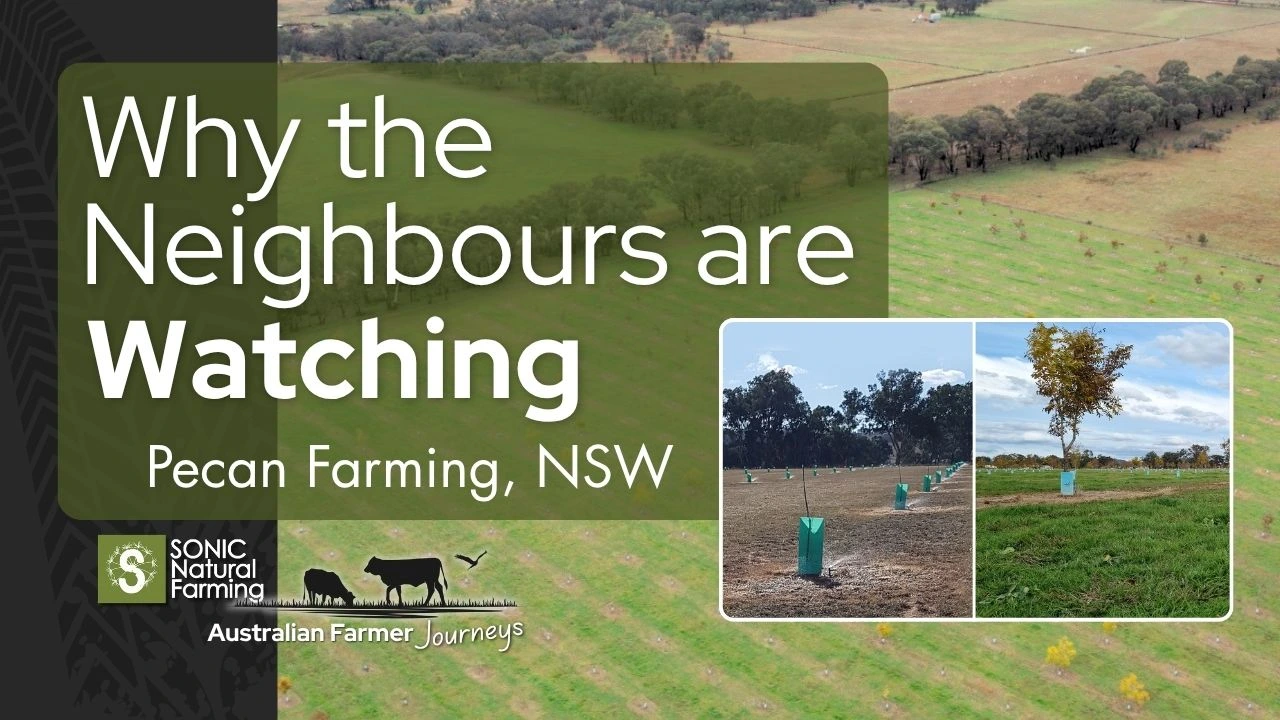
“Neighbours are asking why our paddocks are green while theirs are brown,”
Kilburney Avocado Farm
Central Coast, NSW, Australia
Kilburney Farm, a thriving family-owned operation, produces commercial poultry alongside 5 hectares of flourishing avocado trees, first planted in October 2018.
Committed to regenerative farming principles, the farm has embraced a holistic approach in its avocado and citrus orchards—utilising multi-species cover crops, mulching, and the application of liquid seaweed biofertiliser and fish hydrolysate fertiliser, all produced on-farm.
From the moment the avocado trees were planted, the management team noticed how well the trees took to their new environment, thanks in part to the preparation of mounded soil, enhanced with biofertilisers.
This careful focus on building soil health and fertility has paid off—Kilburney Farm has relied solely on SONIC Biofertilisers since 2018, avoiding synthetic inputs and weed sprays entirely.
As a result, the avocado trees have been producing increasing yields of tasty, nutrient-dense fruit.
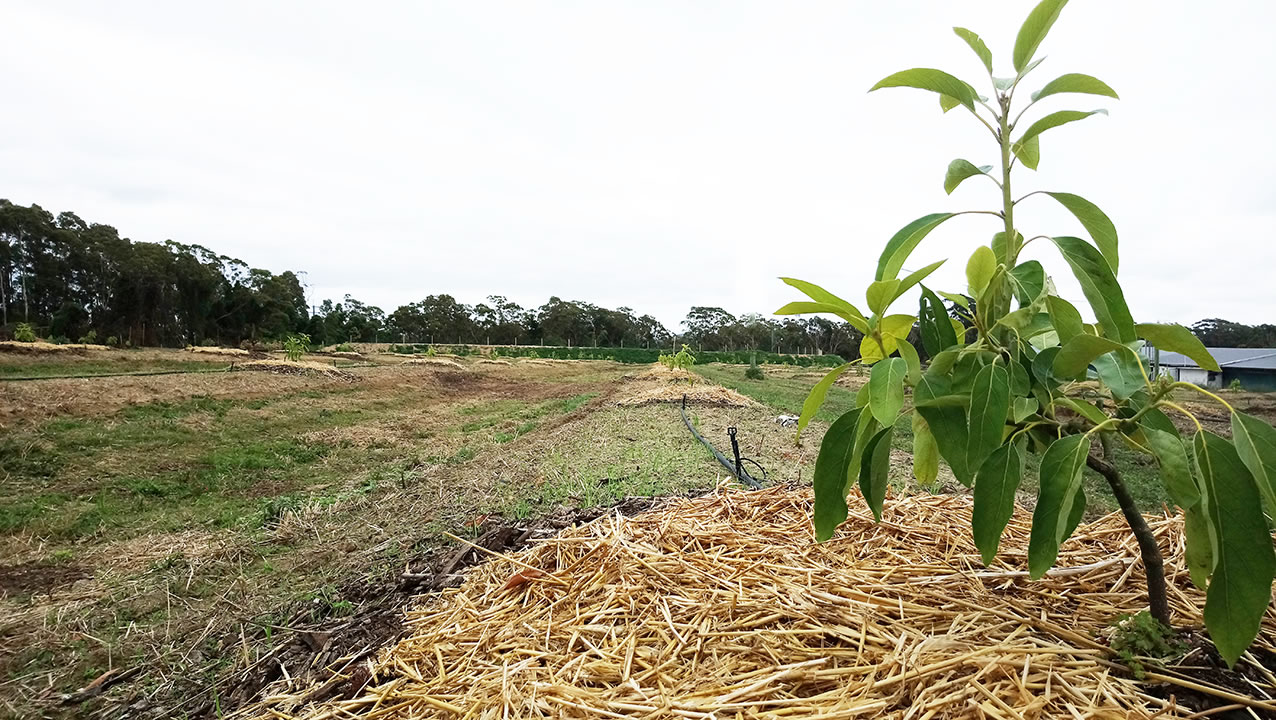
Avocado Tree planting 2018
5 ha avocado trees planted on mounds with hay mulch. Irrigated and seeded with mixed cover crop seeds in between trees. Fertiliser inputs include SONIC Fish Hydrolysate and Seaweed Biological Fertiliser.

2020
The avocado farm maintained mulching as required, applying quarterly applications of Liquid Seaweed Biological Fertiliser and Fish Hydrolysate Fertiliser. Avocado trees have shown no signs of disease or blemishes on fruit.

2023
Kilburney avocado farm maintains cover crops by slashing/mulching. Tasty, good size fruit. No signs of disease on the avocado trees, or blemishes on the fruit.
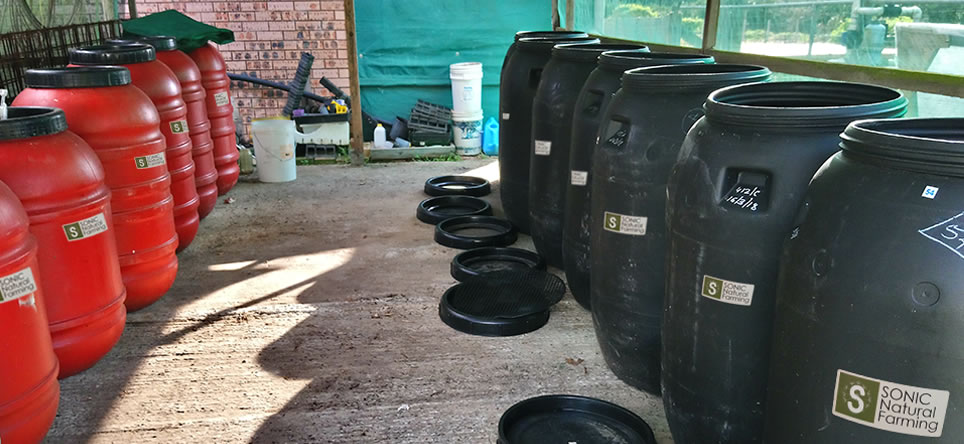
At Kilburney Farm, the family runs their own On-Farm Biofertiliser System to produce Liquid Fish Hydrolysate and Seaweed Biological Fertiliser, cutting out shipping and storage costs.
The efficient on-farm system ensures the farm has on-going access to fresh, high-quality fertiliser/soil amendments for their needs. As a result they have reduced expenses.
2026 Update COMING SOON
Kilburney Farm Farmer Journey
Since we started making and using liquid fish and seaweed biofertilisers, in 2018, we’ve reduced our running costs, and seen nothing but happy healthy avocado trees.
What Other Farmers are Saying..
Tom and Carolyn Reeve – Mirum Creek Organics
Upper Orara, NSW, Australia
Tom and Carolyn from Mirum Creek Organics, near Coffs Harbour, NSW, have been producing certified organic garlic, ginger, turmeric and lemongrass for 12 years, and talk about their goal producing happy produce.
“We like to call our fresh produce “happy food” because our focus is to provide great soil, and all the nutrients and biology for the plants, to grow the way they want – thus happy!”
“If I give the soil the right nutrition, and I allow the complexity and the diversity in the soil, then the plants are going to be happy. They are not going to be stressed.”
There’s a lot of nutrients available in the ocean that are not available on the continent of Australia. We can bring them back by using things like fish hydrolysate and seaweed.
Rod and Tania Bruin – Summit Organics
Tyalgum, NSW, Australia
What does a farm look like after 30 years of biological and organic management?
In this Farmer Journey insight, we visit Rod Bruin on his mixed-crop farm in Australia to see the long-term results of building soil biology. Rod shares why his produce—from micro-greens to heavy crops—now has superior shelf life and resilience, even in high humidity. It’s a masterclass in moving beyond just ‘organic’ to focusing on true nutrient density.
In the video, we explore:
The 30-Year Transformation: How the farm has evolved from conventional to a thriving biological system.
Shelf Life and Produce Quality: Why Rod’s produce ‘holds up’ better and stays fresh longer than water-heavy, conventional crops.
Managing Diversity: Insights into running a successful, high-turnover mixed crop system.
The Biological Engine: The specific practices Rod and Tania use to maintain high fertility without synthetic inputs.
If I see something once and something that dramatic, I know it’s got to be doing good.
Wilson River Pecans
Richmond Hill, NSW, Australia
In this Australian Farm Case Study, we visit a 10,000 pecan tree orchard to see how Wayne solved a recurring disease problem. In high humidity, Anthracnose and black spotting can destroy up to 30% of a tree’s leaf area—effectively starving the tree of the energy it needs to fill the nuts.
Wayne shares his transition from conventional fungicides to a biological regime using natural fertilisers, fish hydrolysate and microbes. The result? Leaves that stayed clean and ‘pristine’ even through the toughest part of the season.
I think it’s doing a fantastic job! We have had the best year with the most tree stress.
Warren Wiggins – Local Dorper Lamb
Boorabee, NSW, Australia
Local Dorper Lamb in Binnaburra, Northern NSW, have been using Liquid Seaweed Minerals for 300-400 dorper sheep and their horses.
For over 4 years, using Probiotic Liquid Seaweed, Warren noticed the sheep were healthier with less worms and the pastures showed more resilience from the healthy ‘biological droppings’ that the sheep spread around.
Warrens adds the Liquid Seaweed to the sheeps trough 2-4 times per month on average, changing with the animals needs.
The sheep rarely have a problem with worms, and the quality of the grass is much better.
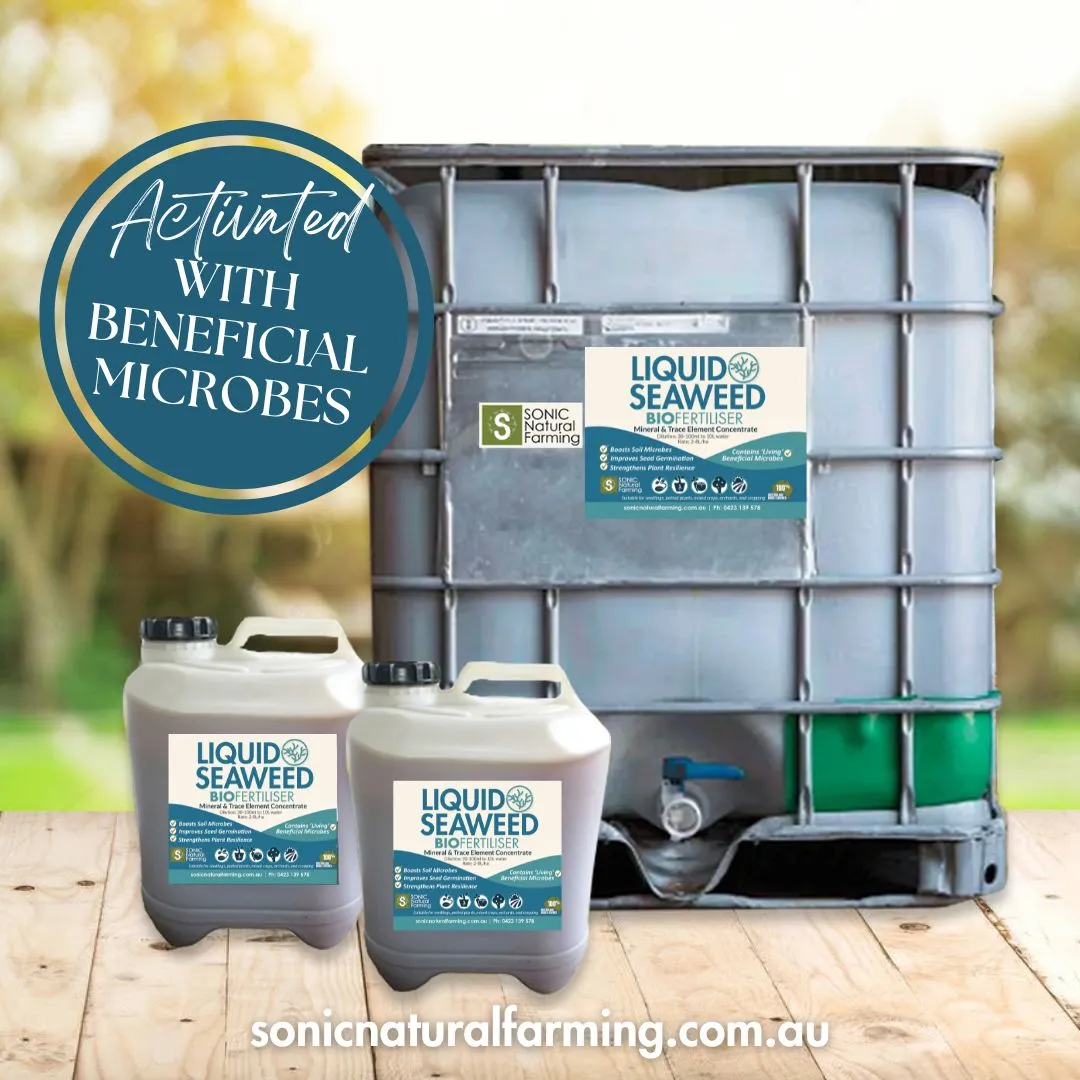
At SONIC Natural Farming, we’re all about making Biological Fertilisers easy to get—and easy on your wallet!
SONIC On-Farm Systems cut out expensive transport fees, saving you big. And by reusing packaging, you reduce waste and cut down on extra costs, keeping even more money in your pocket.
Plus, with our Production and Training Package, you’ll have the know-how, and everything you need, to successfully make your own biological fertiliser right on your farm.
Maximise Savings and Sustainability
Curious about using biofertilisers for your farm? Call our friendly support team
0423 139 578
Top 4 Roles of Regenerative Farmers
The role of natural farmers in regenerative agriculture is crucial for the sustainable development of Australia’s agricultural sector. Natural farmers adopt farming practices that prioritise the health and well-being of the land, plants, animals, and ultimately, the consumers.
1. Soil Health Management
Unlike conventional farming methods that heavily rely on synthetic inputs such as pesticides and chemical fertilisers, natural farmers focus on building healthy soil ecosystems.
Soil health management is crucial for sustainable and environmentally-friendly agricultural practices. Natural farmers prioritise the use of organic and natural methods to cultivate crops, avoiding synthetic fertilisers, pesticides, and genetically modified organisms.
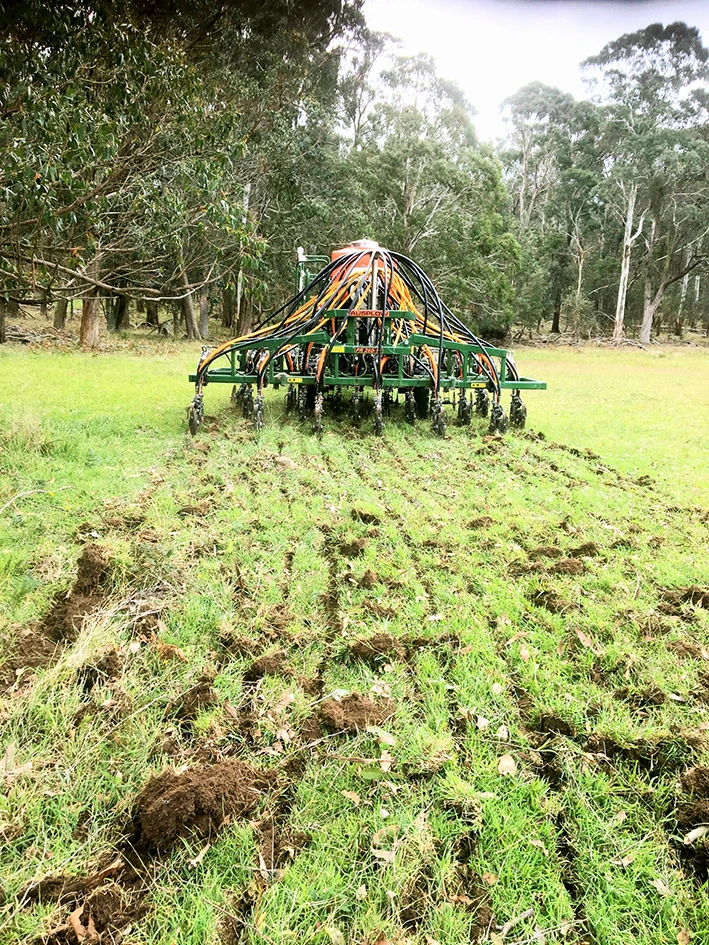
Through implementing practices such as organic matter management, crop rotation, and minimal tillage, farmers enhance soil fertility, promote biodiversity, and reduce erosion. Instead, these techniques help to replenish nutrients in the soil, enhance its structure, and promote beneficial microbial activity.
Furthermore, natural farmers prioritise biodiversity on their farms. By growing a variety of crops and incorporating native plants into their fields, they create habitats for beneficial insects and wildlife. This helps to control pests naturally without relying on chemical interventions.
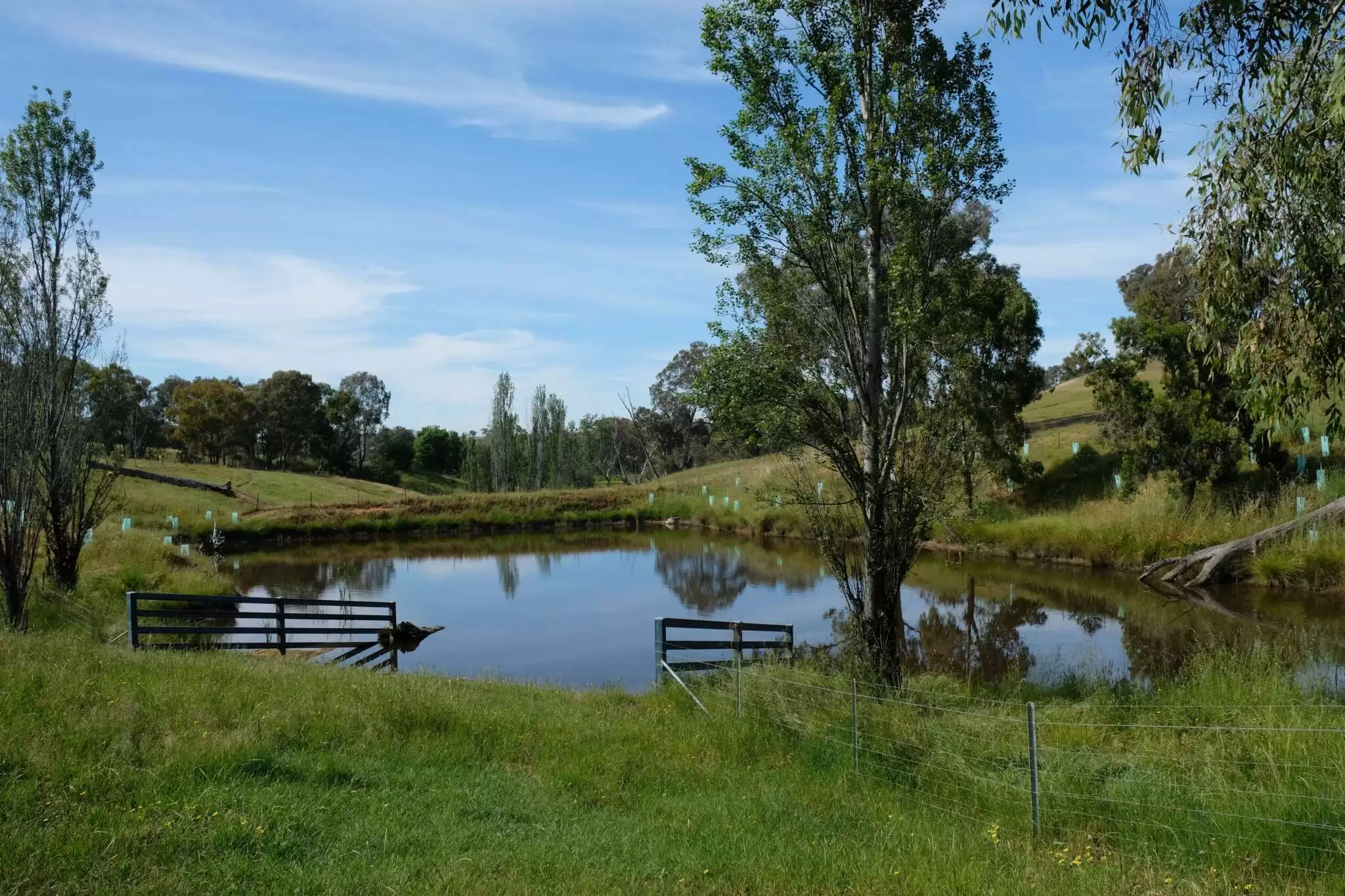
Photo Credit: Sustainable Farms
2. Water Preservation
Natural farmers play a significant role in reducing water pollution by avoiding the use of synthetic fertiliers, pesticides, and herbicides. Instead, they utilise organic alternatives such as biological fertiliser, compost and natural pest control methods.
Natural farming practices prioritise the use of organic and sustainable methods to cultivate crops and raise livestock. By doing so, they prevent harmful chemicals from leaching into nearby water sources, safeguarding water quality for both humans and wildlife.
Furthermore, natural farmers often implement techniques that promote water conservation. They employ practices like rainwater harvesting, drip irrigation systems, and soil moisture monitoring to optimize water usage on their farms. These methods help minimise excessive water consumption while ensuring that crops receive adequate hydration.
In addition to their direct efforts in preserving water quality, natural farmers also contribute indirectly by promoting soil health. Healthy soils act as natural filters that prevent contaminants from reaching groundwater or nearby streams. By prioritising organic matter enrichment and minimising soil erosion, through practices like cover cropping and crop rotation, natural farmers indirectly protect the quality of surrounding bodies of water.
Overall, the role of the natural farmer in preserving water quality is multifaceted. Through their commitment to organic practices, conservation techniques, and soil health promotion, they play a vital part in maintaining a sustainable agricultural system that minimises pollution risks to our precious water resources.
3. Animal Welfare
One of the key roles of a natural farmer is to provide animals with a natural and stress-free environment. They focus on creating spacious and comfortable living conditions, allowing animals to exhibit their natural behaviors. This includes providing ample space for movement, access to fresh air and sunlight, as well as opportunities for social interaction within their herds or flocks.
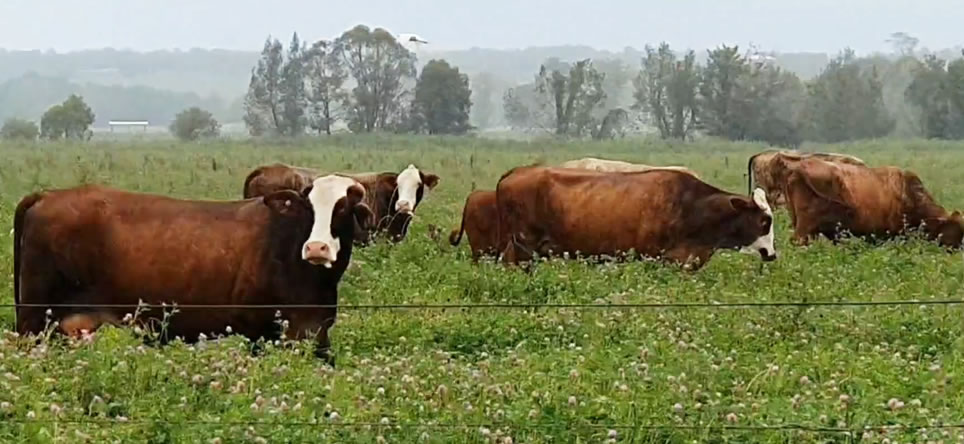
Furthermore, natural farmers prioritise the use of organic feed, natural feed supplements and avoid the use of antibiotics or hormones in animal production. They understand that feeding animals a diet that closely mimics their natural food sources is crucial for their overall health and well-being.
Natural farmers often employ rotational grazing methods. This practice involves moving animals to different pastures regularly, allowing the land to regenerate naturally while preventing overgrazing. By doing so, they ensure that animals have access to fresh grasses and plants while promoting soil fertility.
Overall, the role of a natural farmer in animal welfare is centered around creating an environment that respects and supports the innate needs of animals. Through sustainable practices and ethical treatment, they contribute to healthier livestock populations while also producing high-quality products for consumers who value animal welfare standards.
In addition to their environmental contributions, natural farmers also play a pivotal role in educating consumers about sustainable agriculture practices. They engage with local communities through farmer’s markets or direct-to-consumer sales channels to promote awareness about the benefits of regenerative agriculture and encourage support for local food systems.

4. Nutrient Dense Food Production
Nutrient-dense foods offer numerous health benefits and contribute to overall well-being.The role of the natural farmer in nutrient-dense food production is crucial for promoting sustainable and healthy agricultural practices.
By nurturing the soil through regenerative farming practices, natural farmers ensure that crops are grown in nutrient-rich environments. This results in higher-quality produce that is packed with essential vitamins, minerals, antioxidants, and phytonutrients.
Moreover, natural farmers often prioritise local distribution channels and direct-to-consumer sales. This reduces carbon emissions associated with long-distance transportation while supporting local economies. By fostering relationships between consumers and producers, natural farmers create a sense of transparency and trust around food production methods.
Overall, natural farmers are key players in regenerative agriculture in Australia. Their commitment to sustainable farming practices benefits both the environment and consumers by promoting healthier ecosystems while providing nutritious food options. While the role of the natural farmer in nutrient-dense food production is multifaceted, their commitment to sustainable farming practices not only yields healthier crops but also contributes to environmental preservation and community well-being.
What’s the latest?
Fresh resources, farm case studies, and regenerative farming updates, in your inbox every season.