SONIC Biofertilisers are supplied fresh and do not contain preservatives or artificial additives. They are best used within three (3) months from the time they have finished processing. Best-before dates are marked on product containers.
The best time to apply biological fertilisers is during overcast conditions, just before or during rain, or later in the day when temperatures are cooler. These conditions help protect the living microbes in the fertiliser from heat and UV exposure, giving them a...
Biofertilisers work optimally when using lower rates, more frequently. For grazing pastures and orchards, apply three or more times per year—particularly during the first one to three years of use or when transitioning from synthetic fertilisers. For small mixed crops...
Yes, they are compatible with standard spray and irrigation equipment, including boom sprayers, airblast sprayers, tractor-mounted units, drones, and fertigation systems. For best results, fill the tank with water first, then add the product to reduce foaming. Use the...
We service all regions across Australia for both product supply and on-farm production systems. Fresh processed biological fertilisers are delivered nationwide. For on-farm systems and training, we work with both local and remote operations. Where in-person visits...
Yes, SONIC Systems are customised to meet the specific needs of your farm, with system sizes tailored to align with your specific spray regime and on-going liquid fish and seaweed biofertiliser requirements. The Biofertiliser System size is matched to your...
After the initial start-batch training session (approx. 3 hrs), you’ll receive scheduled VIP support throughout your first three (3) batches — typically over 9–12 months — allowing time to learn the nuances and natural variability of biological fermentation systems....
The Starter Package comes with full support to help you set up and run your own on-farm biofertiliser system, including installation assistance and all inputs needed for processing Liquid Fish and Seaweed Biofertiliser, as well as Liquid Kelp Probiotic Livestock...
Producing biological fish and seaweed fertilisers on-farm can significantly reduce input costs through: Lower freight costs – Reduce liquid fertiliser shipping costs by around 90%, as you only need to transport the dried raw ingredients.Less plastic packaging and...
No. SONIC Liquid Fish and Seaweed Biofertiliser products are natural and non-toxic, so no withholding period is required after application. SONIC Liquid Seaweed is actually good for livestock and is used as part of the SONIC Livestock Probiotic Supplement formula. It...
Liquid seaweed extracts, such as Seasol, are usually produced using chemical or heat extraction to concentrate certain compounds. While these products are widely used, the process can reduce some of the natural components of the seaweed. Seaweed biofertiliser, on the...
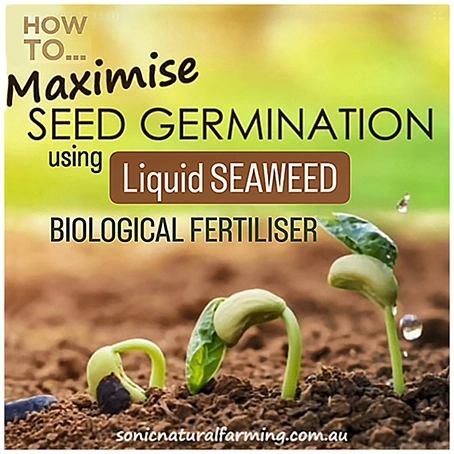
These products begin working immediately by stimulating soil biology and delivering bioavailable nutrients. Results vary depending on soil condition and management practices. Early benefits such as improved seed germination and plant establishment can be seen quickly,...
Conventional synthetic fertilisers are designed to deliver nutrients rapidly, creating fast and predictable plant responses. When nitrogen, phosphorus, and potassium are applied in synthetic forms, plants often respond with quick greening and a surge in biomass....