No. The decanting process separates the liquid from the solids, allowing every part to be put to good use. The leftover seaweed (rehydrated granules) can be applied around gardens and fruit trees as a slow-release fertiliser or fed directly to livestock. The remaining...
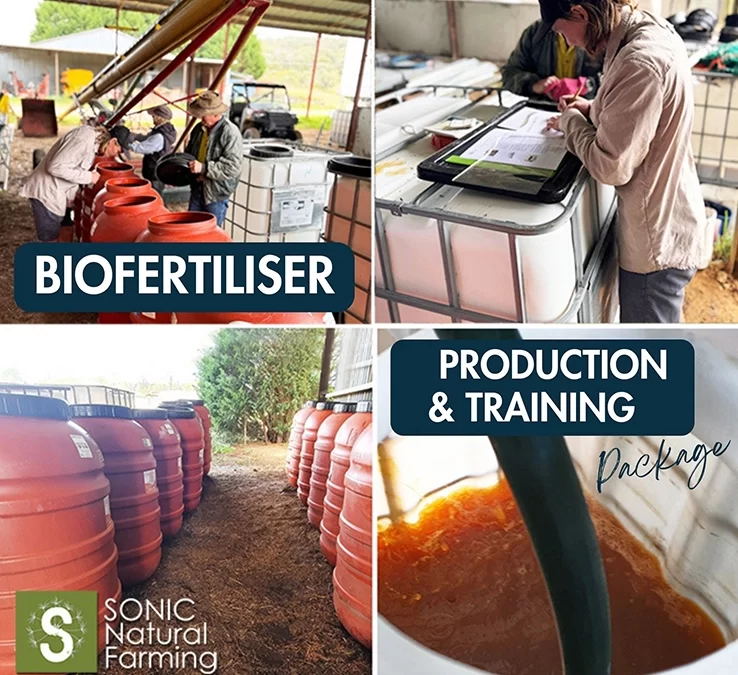
A full batch takes approx. 10 weeks from start to decanting. We check in with you at the midpoint (week 5) and again towards the end (week 10) to make sure everything’s tracking correctly, so you’re never left guessing. First three batch outcomes are...
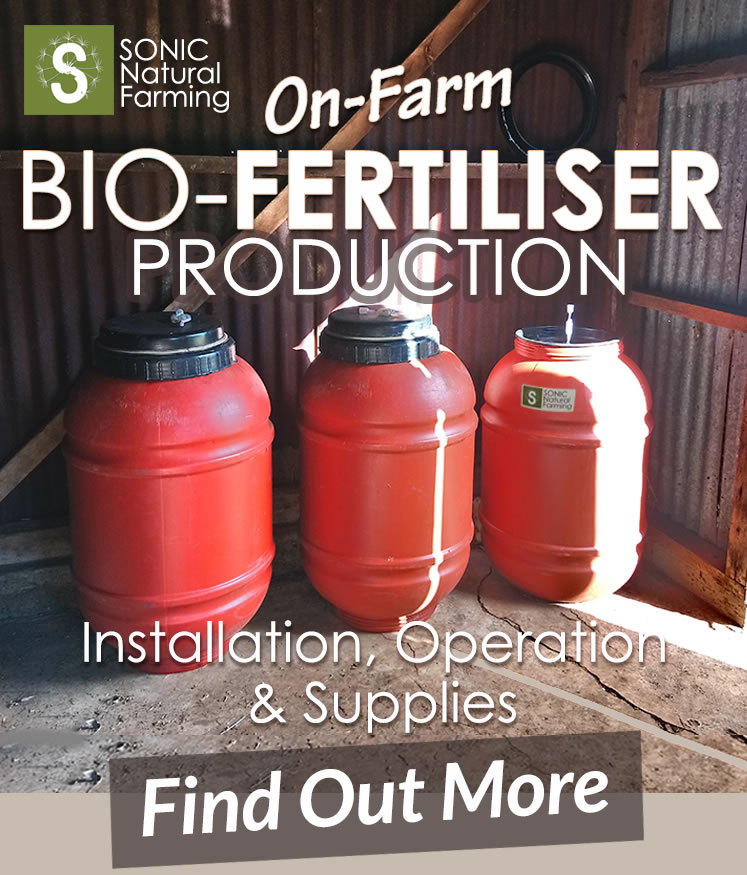
Yes, we provide the raw ingredients required for a DIY On-Farm Biological Fermentation System, including Australian organic dried seaweed, Australian dried ocean fish (discards from processing), proprietary Starter Cultures, and supporting materials. This helps ensure...
The cost of a Training Starter Package includes a one-off setup and training fee (approx. 3 hours of hands-on 1:1 guidance during your first batch). Because this fee is spread across your first batch, the per-litre cost depends on your farm’s production size and...
We’ve streamlined the process to be straight forward and repeatable by providing pre-measured ingredients and practical procedures. It approximately takes around 1 hour to start a 1,000L batch, then after fermentation is complete, it takes another 1–1.5 hours to...
SONIC Liquid Fish and Seaweed Biological Fertilisers are used because they provide both plant nutrition and support for soil biology, helping improve overall soil health and plant performance. Key benefits include:• Providing fast-available nutrients for plant uptake•...
Biological fertilisers activate soil biology by feeding and stimulating the existing microbes already present in the soil. Products such as liquid fish and seaweed fertilisers supply organic compounds, carbon sources, and trace nutrients that help microbes grow and...
Soil biology drives the breakdown of organic matter and the release of nutrients into plant-available forms. It also supports soil structure and plant resilience, making it a key part of long-term soil fertility. Read article 4 Good Reasons To Feed Soil Microbes All...
Yes. Liquid fish and seaweed biological fertilisers provide plant-available nutrients and organic compounds that stimulate soil biology. This helps improve nutrient cycling, root development, and overall soil function over time. Read article Can You Improve Soil...
The fastest way is to combine organic inputs with biological stimulation. Applying liquid fertilisers such as fish and seaweed can provide immediate bioavailable nutrients while also feeding and stimulating populations of beneficial soil microbes, helping to kickstart...
Yes. Soil health can be improved without relying on synthetic fertilisers by increasing organic matter, supporting soil biology, and using inputs such as liquid fish and seaweed biofertilisers. These approaches help improve nutrient availability, soil structure, and...
SONIC biological fertilisers can help balance soil pH over time by improving overall soil function. The microbes in our biologically fermented fertilisers enhance nutrient cycling and soil structure, which can help buffer pH fluctuations and create more balanced soil...
We source both fresh and dried fish waste, generated after processing for human consumption, from a network of fish shops and processors handling ocean-caught fish across Australia. By utilising these by-products, we help divert organic waste from landfill and...
SONIC Biofertilisers are supplied fresh and do not contain preservatives or artificial additives. They are best used within three (3) months from the time they have finished processing. Best-before dates are marked on product containers.
The best time to apply biological fertilisers is during overcast conditions, just before or during rain, or later in the day when temperatures are cooler. These conditions help protect the living microbes in the fertiliser from heat and UV exposure, giving them a...
Biofertilisers work optimally when using lower rates, more frequently. For grazing pastures and orchards, apply three or more times per year—particularly during the first one to three years of use or when transitioning from synthetic fertilisers. For small mixed crops...
Yes, they are compatible with standard spray and irrigation equipment, including boom sprayers, airblast sprayers, tractor-mounted units, drones, and fertigation systems. For best results, fill the tank with water first, then add the product to reduce foaming. Use the...
We service all regions across Australia for both product supply and on-farm production systems. Fresh processed biological fertilisers are delivered nationwide. For on-farm systems and training, we work with both local and remote operations. Where in-person visits...
No. The decanting process separates the liquid from the solids, allowing every part to be put to good use. The leftover seaweed (rehydrated granules) can be applied around gardens and fruit trees as a slow-release fertiliser or fed directly to livestock. The remaining...
A full batch takes approx. 10 weeks from start to decanting. We check in with you at the midpoint (week 5) and again towards the end (week 10) to make sure everything’s tracking correctly, so you’re never left guessing. First three batch outcomes are...
Yes, we provide the raw ingredients required for a DIY On-Farm Biological Fermentation System, including Australian organic dried seaweed, Australian dried ocean fish (discards from processing), proprietary Starter Cultures, and supporting materials. This helps ensure...
The cost of a Training Starter Package includes a one-off setup and training fee (approx. 3 hours of hands-on 1:1 guidance during your first batch). Because this fee is spread across your first batch, the per-litre cost depends on your farm’s production size and...
We’ve streamlined the process to be straight forward and repeatable by providing pre-measured ingredients and practical procedures. It approximately takes around 1 hour to start a 1,000L batch, then after fermentation is complete, it takes another 1–1.5 hours to...
SONIC Liquid Fish and Seaweed Biological Fertilisers are used because they provide both plant nutrition and support for soil biology, helping improve overall soil health and plant performance. Key benefits include:• Providing fast-available nutrients for plant uptake•...
Biological fertilisers activate soil biology by feeding and stimulating the existing microbes already present in the soil. Products such as liquid fish and seaweed fertilisers supply organic compounds, carbon sources, and trace nutrients that help microbes grow and...
Soil biology drives the breakdown of organic matter and the release of nutrients into plant-available forms. It also supports soil structure and plant resilience, making it a key part of long-term soil fertility. Read article 4 Good Reasons To Feed Soil Microbes All...
Yes. Liquid fish and seaweed biological fertilisers provide plant-available nutrients and organic compounds that stimulate soil biology. This helps improve nutrient cycling, root development, and overall soil function over time. Read article Can You Improve Soil...
The fastest way is to combine organic inputs with biological stimulation. Applying liquid fertilisers such as fish and seaweed can provide immediate bioavailable nutrients while also feeding and stimulating populations of beneficial soil microbes, helping to kickstart...
Yes. Soil health can be improved without relying on synthetic fertilisers by increasing organic matter, supporting soil biology, and using inputs such as liquid fish and seaweed biofertilisers. These approaches help improve nutrient availability, soil structure, and...
SONIC biological fertilisers can help balance soil pH over time by improving overall soil function. The microbes in our biologically fermented fertilisers enhance nutrient cycling and soil structure, which can help buffer pH fluctuations and create more balanced soil...
We source both fresh and dried fish waste, generated after processing for human consumption, from a network of fish shops and processors handling ocean-caught fish across Australia. By utilising these by-products, we help divert organic waste from landfill and...
SONIC Biofertilisers are supplied fresh and do not contain preservatives or artificial additives. They are best used within three (3) months from the time they have finished processing. Best-before dates are marked on product containers.
The best time to apply biological fertilisers is during overcast conditions, just before or during rain, or later in the day when temperatures are cooler. These conditions help protect the living microbes in the fertiliser from heat and UV exposure, giving them a...
Biofertilisers work optimally when using lower rates, more frequently. For grazing pastures and orchards, apply three or more times per year—particularly during the first one to three years of use or when transitioning from synthetic fertilisers. For small mixed crops...
Yes, they are compatible with standard spray and irrigation equipment, including boom sprayers, airblast sprayers, tractor-mounted units, drones, and fertigation systems. For best results, fill the tank with water first, then add the product to reduce foaming. Use the...
We service all regions across Australia for both product supply and on-farm production systems. Fresh processed biological fertilisers are delivered nationwide. For on-farm systems and training, we work with both local and remote operations. Where in-person visits...