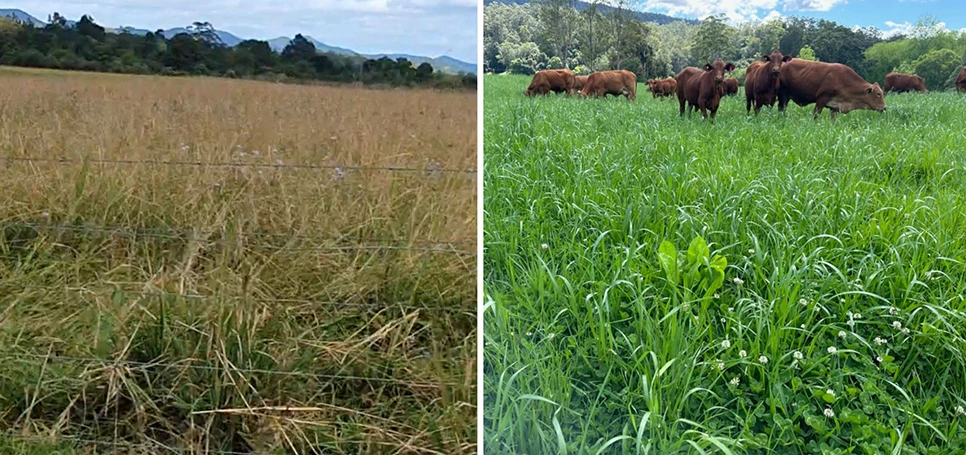
True soil fertility doesn’t come from synthetic fertilisers—it comes from how nutrients are cycled and made available through living soil biology. Fertile soil is a living system. When that system is working properly, it can store, release, and cycle nutrients far...
When we talk about fertiliser today, most of the conversation quickly turns to products, NPK, and application rates. But the original meaning of the word ‘fertiliser’ points in a very different direction—one that’s worth revisiting, especially in the...
57% of Australian farmers cite economic conditions as their biggest challenge —rising input costs, inflation, and unpredictable markets are tightening margins across the board. Fertiliser, fuel, feed, and labour expenses have all surged, forcing producers to rethink...
What can you do when your budget is tight or feed is scarce — but your livestock still need to perform and stay healthy? With input prices rising — and paddock feed either scarce or low in nutrients — many Australian farmers are looking for ways to make limited feed...
What Is Seaweed Biofertiliser? Seaweed biofertiliser is a naturally fermented liquid fertiliser and soil conditioner made from Australian bull kelp—a fast-growing marine plant rich in essential minerals, trace elements, and natural growth hormones. Unlike synthetic...
The term “Agroforestry” was first coined in the 1970s by researchers who were looking for ways to combine agricultural crops with tree planting, aiming to create more sustainable farming systems. The concept itself, however, is much older, as many...
Water quality is a critical factor that can make or break the success of your fertiliser applications on the farm. Whether you’re using organic fertilisers like compost, or synthetic options, the quality of your water can directly impact nutrient availability, soil...
No-till farming is fast becoming a popular choice among small mixed crop growers, and for good reason. This sustainable farming technique offers numerous benefits that improve soil health, boost water retention, and streamline farm operations. If you’re tired...
Iodine is an essential trace element that plays a critical role in both soil health and livestock wellbeing. Despite its importance, many farmers overlook iodine deficiencies, which can lead to a host of problems, including stunted growth in crops and reproductive...
True soil fertility doesn’t come from synthetic fertilisers—it comes from how nutrients are cycled and made available through living soil biology. Fertile soil is a living system. When that system is working properly, it can store, release, and cycle nutrients far...
When we talk about fertiliser today, most of the conversation quickly turns to products, NPK, and application rates. But the original meaning of the word ‘fertiliser’ points in a very different direction—one that’s worth revisiting, especially in the...
57% of Australian farmers cite economic conditions as their biggest challenge —rising input costs, inflation, and unpredictable markets are tightening margins across the board. Fertiliser, fuel, feed, and labour expenses have all surged, forcing producers to rethink...
What can you do when your budget is tight or feed is scarce — but your livestock still need to perform and stay healthy? With input prices rising — and paddock feed either scarce or low in nutrients — many Australian farmers are looking for ways to make limited feed...
What Is Seaweed Biofertiliser? Seaweed biofertiliser is a naturally fermented liquid fertiliser and soil conditioner made from Australian bull kelp—a fast-growing marine plant rich in essential minerals, trace elements, and natural growth hormones. Unlike synthetic...
The term “Agroforestry” was first coined in the 1970s by researchers who were looking for ways to combine agricultural crops with tree planting, aiming to create more sustainable farming systems. The concept itself, however, is much older, as many...
Water quality is a critical factor that can make or break the success of your fertiliser applications on the farm. Whether you’re using organic fertilisers like compost, or synthetic options, the quality of your water can directly impact nutrient availability, soil...
No-till farming is fast becoming a popular choice among small mixed crop growers, and for good reason. This sustainable farming technique offers numerous benefits that improve soil health, boost water retention, and streamline farm operations. If you’re tired...
Iodine is an essential trace element that plays a critical role in both soil health and livestock wellbeing. Despite its importance, many farmers overlook iodine deficiencies, which can lead to a host of problems, including stunted growth in crops and reproductive...