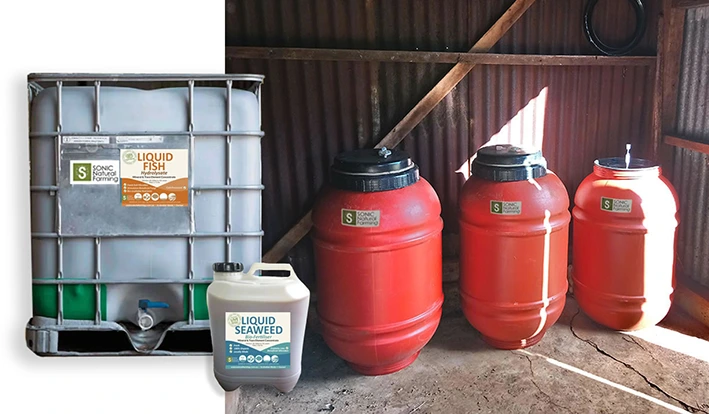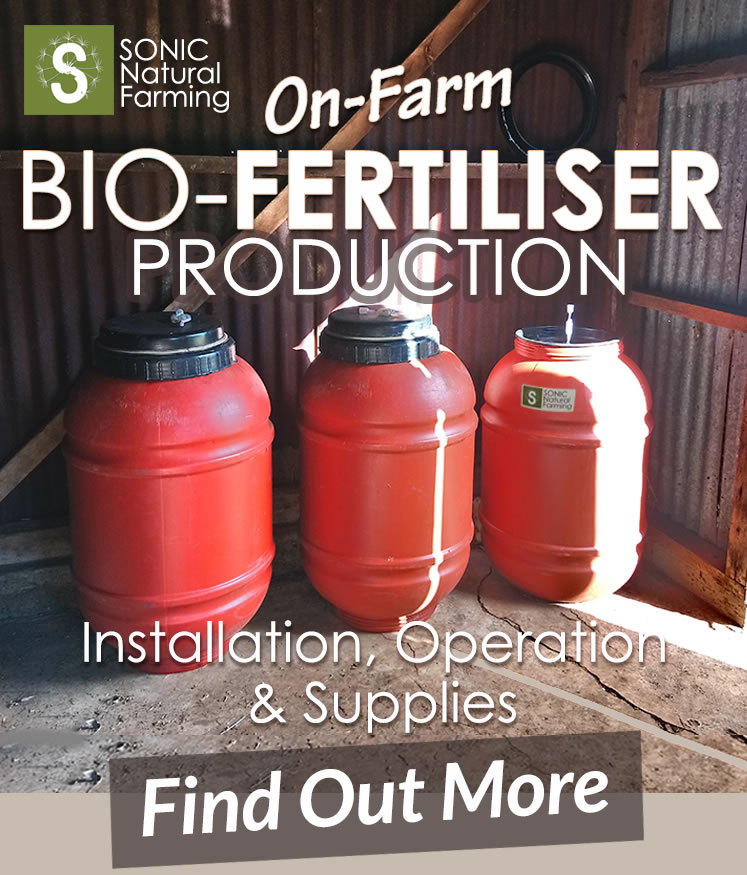

Farmers stand to gain numerous benefits from utilising an On-Farm Biofertiliser Production System to acess fresh Liquid Fish Hydrolysate and Liquid Seaweed Biofertiliser and Liquid Kelp Probiotic Livestock Supplement. An On-Farm Production System and Services offer a range of advantages that can positively impact both the environment and your ‘bottom line.
In this article you’ll discover 8 compelling reasons to consider On-Farm Production Systems and Services and the benefits it can deliver for your crops and your agricultural enterprise.
1. Unlock Product Cost Savings
One of the key benefits of utilising an On-Farm Biofertiliser Production System is the product cost savings. By having natural biofertilisers produced on-farm, farmers can significantly reduce their expenses compared to purchasing commercial fertilisers.
On-Farm Biofertiliser Production provides farmers with multiple cost savings
Not only can commercial organic fertilisers be expensive, but farmers often have to buy them in smaller quantities due to limited storage space or financial constraints. This results in higher per-unit costs for the fertiliser.
However, by having their own fertilisers produced on-farm, farmers can produce large annual quantities in successive batches, receiving bulk supply savings at a lower cost per unit.
Furthermore, using natural ingredients to produce Biological Fertilisers, such as Australian seaweed (kelp) or ocean fish (discards from processing), not only reduces costs, compared to commercial feriliser, but also provides a superior product with outstanding benefits for soil health and crop performance.

2. Eliminate Product Delivery Costs
Traditional supply chains often involve long-distance transportation of fertiliser products from manufacturing facilities to distribution centers, and then to retailers or directly to farmers.
This transportation process incurs additional expenses in terms of fuel, logistics, and handling fees. However, by having Biological Fertilisers produced on-farm, farmers can eliminate or significantly reduce these costs.
On-Farm Biofertiliser Production helps farmers save on product transportation costs
The reduced shipping of goods also has environmental benefits as it minimises carbon emissions associated with long-haul transportation. By adopting an on-farm production approach, farmers can contribute towards sustainable agriculture practices by reducing their carbon footprint.
This is where crop production services, like the on-farm production and training of biological fertilisers, come into play. Such services empower farmers with greater control over product costs, while simultaneously reducing the need for product transportation.
3. Access Fresh ‘Living’ Soil Care Products
On-farm production of biological fertilisers offers numerous benefits to farmers including greater control over product freshness.
On-Farm Production ensures your products are biologically active when applied to crops
Unlike commercially produced fertilisers that may have a longer shelf life due to the addition of preservatives, SONIC Biological Fertilisers are most effective when used soon after they have finished processing. This ensures that the microorganisms are at their peak activity, maximising their effectiveness in promoting fertile soil and plant growth.
4. Additional By-Product Uses from Processing
SONIC Biofertiliser Production Systems, training and on-farm services offer a sustainable and eco-friendly approach to agricultural practices. These systems are designed to produce no harmful by-products or pollution, making them an environmentally conscious choice for farmers.
One of the key benefits of these fermentation systems is their ability to provide useful by-products, that can be utilised in a number of beneficial ways.
By-products generated can be utilised on-farm as animal feed supplements, contributing to a circular economy approach. They can be used as alternate fertilisers, such as a slow-release fertiliser, ensuring a steady supply of nutrients to plants over time. The by-products can also be used as effective compost activators.
Maximise resource utilisation through useful byproducts
Rather than being wasted or discarded, these by-products are immediately repurposed, on-farm. This not only reduces waste but also provides valuable resources for the farm further enhancing cost-savings and sustainability.
5. Reduced Plastic Container Use and Waste
On-Farm Biofertiliser Production Systems and Training Services play a significant role in addressing the issue of plastic packaging waste. One way they contribute to reducing this waste is through recycling containers used on-farm. These fertilisers are made from organic materials and are not harmful, therefore the storage and fermentation containers can be washed and reused.
On-Farm Biofertiliser Production reduces reliance on single-use plastic packaging
This shift towards more sustainable farming practices can result in substantial cost savings for farmers, as they no longer need to purchase and dispose of large quantities of plastic containers.
Rather than contributing to landfill waste, part of On-Farm Biofertiliser Production is to save used containers and recycle them for future use. This approach helps to further reduce the amount of single-use plastic waste generated by agricultural activities.
Overall, On-Farm Biofertiliser Production offers a practical solution to the problem of plastic packaging waste in agriculture. By embracing On-Farm Biofertiliser Production, and implementing recycling initiatives, farmers can make significant strides towards a more sustainable, economically viable, and environmentally friendly farming industry.

6. Quality Assurance Guaranteed
SONIC Production and Training packages help farmers to process their own consistent, high-quality products, providing raw ingredients and supplies as part of their innovative crop production services.
Quality control measures ensure each batch meets the highest standard
Farmers operating a SONIC Biofertiliser System can be assured of guaranteed outcomes for their first three (3) batches. The company’s commitment to consistency in quality means that farmers can rely on their fertilisers for purity, with no artificial preservatives or synthetic minerals added.
SONIC DIY System in Qld, Australia, producing over 6,000L/yr SONIC Liquid Fish and Liquid Seaweed Biological Fertiliser, in operation for cattle pasture improvement. (Above video cover image).
7. Eco-Friendly Products and Production
The use of synthetic (chemical) fertilisers and pesticides has been found to have detrimental effects on various aspects of the environment. These impacts include the health of the soil, plants, animals, waterways, and even the food chain.
SONIC eco-friendly On-Farm Biofertiliser Production Systems do not generate any harmful byproducts or pollution. One of the key components of this system is the use of entirely natural ingredients instead of chemical or synthetic ones. These fertilisers are derived from natural ocean-sourced seaweed (kelp) and fish (leftover from processing) that provide essential nutrients to plants while also improving soil health and fertility.
By adopting a SONIC Biofertiliser System, farmers can reduce their reliance on store bought chemical fertilisers and pesticides, thereby minimising their impact on the environment.
Overall, embracing eco-friendly solutions can help protect soil, plants, animals, waterways, and ultimately safeguard the entire food chain from harmful pollutants associated with conventional farming methods using synthetic (chemical) fertiliser inputs.
By having Biological Fertilisers produced on-farm, using natural Australian ingredients, farmers can significantly reduce their expenses compared to purchasing commercial fertilisers.
For more information about SONIC On-Farm Production Systems and Training Services Australia, and availability for your farm, Contact Customer Support or Schedule a (free) Strategy Call

BIOLOGICAL FERTILISER
DIY Systems
& Bulk Supplies