
If you’re looking to boost your farm’s productivity without breaking the bank, you’re in the right place. In this article, we’ll delve into seven time-tested, cost-effective, organic fertilisers that have been the backbone of sustainable farming for generations. From biochar and liquid fish to seaweed, rockphos, compost, and vermicast, these natural wonders are trusted by growers across Australia and world-wide.
Whether you’re a seasoned farmer or just starting out, these organic natural fertilisers will enrich your soil, improve plant health, and enhance your yields. Let’s dig in and explore how these tried-and-true products can transform your farm.
1. Seaweed – Your Crop’s Best Kept Secret
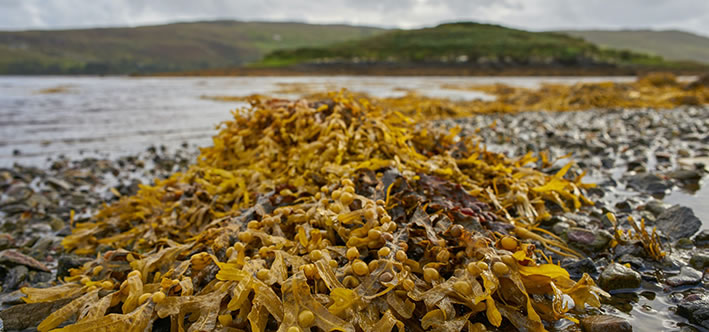
With an incredible source of organic minerals and nutrients, seaweed is among the most versatile organic farming products available.
Kelp Seaweed is rich in essential micronutrients, which help enhance soil structure and stimulate plant growth
Seaweed fertilisers improve water retention in the soil, increase the availability of nutrients to plants, and support the development of beneficial soil microorganisms. As a result, crops grown with kelp seaweed fertilisers are often healthier and more resilient.
How To Use Seaweed on your Crops
One of the standout features of kelp seaweed fertilisers is their versatility in organic farming. They can be used as:
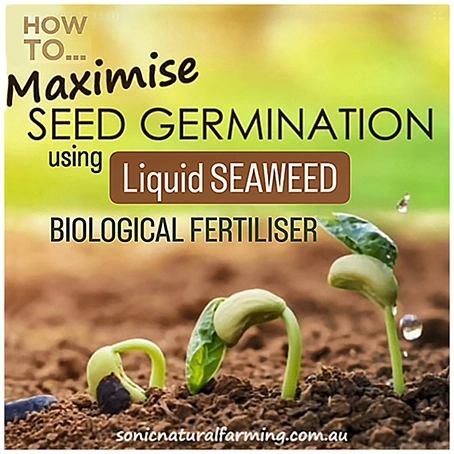
- Seed Inoculant: Harness the natural growth hormones in Liquid Biological Kelp products for increased seed germination rates.
- Soil Conditioner: Seaweed enhances soil texture and fertility, promoting robust plant growth.
- Foliar Spray: Get immediate nutrient uptake through the leaves, boosting plant health and growth rates with liquid seaweed fertiliser.
- Compost Activator: Speed up the composting process by adding seaweed’s essential nutrients and promoting microbial activity.
Application Tips
Integrating organic kelp seaweed fertilisers into various farming activities can maximise their benefits. Here are some best practices for applying these organic farming products:
- Seed Treaetment – Spray or soak seeds with Biological Liquid Seaweed before planting to accelerate germination and early growth.
- Soil Application: Mix dried kelp fertiliser into the soil at the time of planting or as a top dressing during the growing season. This ensures that the nutrients are available to the plants throughout their growth cycle.
- Foliar Spray: Dilute concentrated seaweed products and apply to foliage. This method is particularly effective during periods of rapid growth or stress.
- Compost Activation: Add kelp seaweed to your compost pile to boost its nutrient content and speed up decomposition. This enriched compost can then be used to enhance soil fertility across your farm.
Additional uses for seaweed include;
- Livestock Feed Additive: When added to livestock feed, seaweed can help to improve digestion and nutrient absorption. It also has the potential to reduce methane emissions from livestock, contributing to more sustainable farming practices. See SONIC bio-available liquid seaweed for livestock.
By incorporating kelp seaweed fertilisers into your farming practices, you can improve soil health, enhance plant growth, and support sustainable agricultural methods. These organic farming products offer a practical and effective solution for farmers looking to optimise their operations naturally.
2. Organic Fish Fertilisers – Liquid Protein
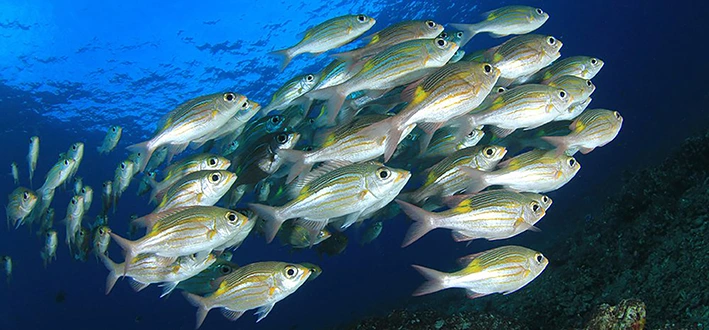
Fish-based fertilisers, such as fish hydrolysate fertiliser, is a potent organic solution derived from whole fish, which has been broken down into a liquid form. This method preserves the essential nutrients and beneficial compounds, making liquid fish an excellent choice for organic farming.
Benefits
Organic fish fertiliser is packed with essential nutrients, including nitrogen, phosphorus, and potassium, as well as trace minerals, amino acids, and fatty acids. These nutrients are vital for healthy plant growth and development.
- Promotes Microbial Activity: The organic matter in fish fertiliser supports the growth and activity of beneficial soil microorganisms. These microbes play a crucial role in nutrient cycling, breaking down organic matter, and enhancing soil fertility.
- Boosts Plant Health: Regular use of fish fertiliser can improve plant vigour, enhance root development, and increase resistance to pests and diseases. The nutrients and organic compounds provide plants with a balanced diet, promoting overall health.
Uses
- Soil Drench: Applying fish hydrolysate as a soil drench delivers nutrients directly to the root zone. This method helps in improving soil structure, increasing microbial activity, and ensuring that plants have access to essential nutrients for growth.
- Foliar Feeding: Foliar application involves spraying fish fertiliser directly onto the leaves of plants. This allows for quick nutrient absorption through the leaf surface, providing an immediate nutrient boost and enhancing photosynthesis.
- Compost Enhancement: Adding fish hydrolysate to compost piles accelerates the decomposition process. The nutrients and organic compounds in the fertiliser feed composting microbes, resulting in a richer and more nutrient-dense compost.
Application Tips
- Dilution Ratios: Dilute organic fish fertiliser according to the specific needs of your plants and the manufacturer’s recommendations. A common dilution ratio is 1:50 (1 part fish hydrolysate to 50 parts water) for soil drenching and foliar feeding.
- Timing: Apply fish fertiliser during the early morning or late afternoon to avoid the heat of the day. This prevents rapid evaporation and allows for better absorption of nutrients by the plants. For foliar feeding, ensure the leaves are not wet from rain or irrigation to maximise uptake.
Organic fish fertiliser is a versatile and powerful tool for organic farming, offering numerous benefits and applications. For more detailed information and sourcing options, explore SONIC Natural Farming liquid fish products and affordable supply options.




Join us as we delve into the inspiring journey of pecan and sheep farmers, Wayne and Sue Green, who have harnessed the full potential of SONIC Liquid Fish and Seaweed Biofertilisers to achieve remarkable success.
In this video interview, these innovative farmers share their firsthand experiences and insights on how these organic fertilisers have transformed their agricultural practices. They have explored various applications, including foliar spray, irrigation, and boom spray, as well as feeding the liquid seaweed supplement to their sheep.
This comprehensive approach, and the outcomes so far, has underscored the versatility and effectiveness of using time-tested organic fertilisers in modern agriculture.
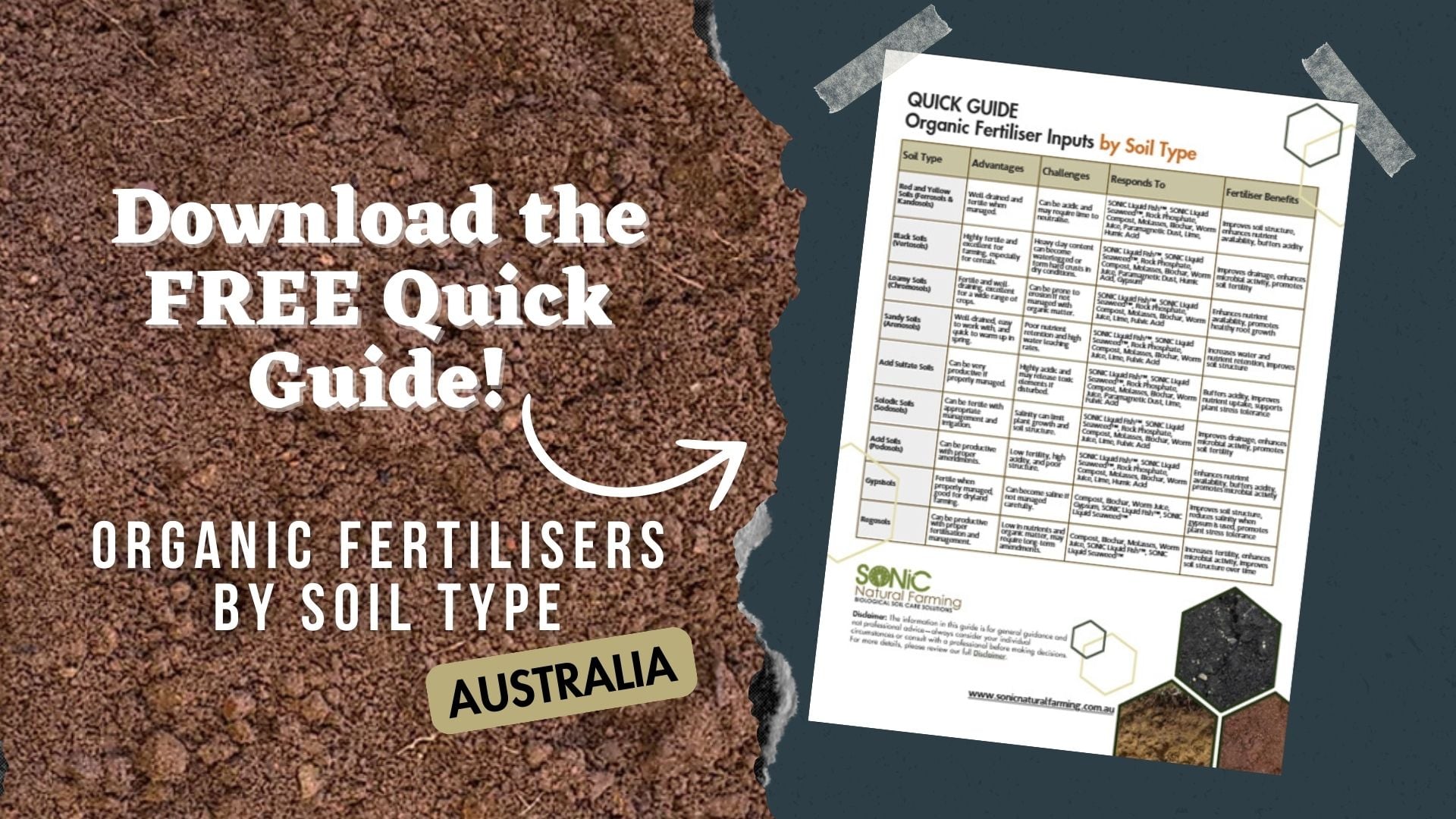
Unlock the potential of your land by tailoring organic fertilisers to suit your unique Aussie soil type. The right organic fertilisers—like compost, biochar, or liquid fish—can not only boost crop resilience, but also improve soil fertility and sustainability over time.
Discover some of the most popular natural organic fertilisers you can tailor to your soil. Download our ‘Organic Fertilisers by Soil Type – Quick Guide’ to get started!

Biological Fertiliser FAQs
Conventional synthetic fertilisers are designed to deliver nutrients rapidly, creating fast and predictable plant responses. When nitrogen, phosphorus, and potassium are applied in synthetic forms, plants often respond with quick greening and a surge in biomass.
Biological fertilisers, on the other hand, work in a fundamentally different way to conventional synthetic inputs. Rather than supplying nutrients in a readily available chemical form, they focus on supporting the living processes within the soil that naturally create fertility over time.
Read article Rethinking Soil Fertility: The True Meaning of Fertiliser
These products begin working immediately by stimulating soil biology and delivering bioavailable nutrients. Results vary depending on soil condition and management practices.
Early benefits such as improved seed germination and plant establishment can be seen quickly, while longer-term improvements—particularly in grazing systems—build over one to three years. In horticulture and orchards, growers often notice improved growth, quality, and extended shelf life of produce with regular use.
Read more about SONIC Biological Fertilisers
Liquid seaweed extracts, such as Seasol, are usually produced using chemical or heat extraction to concentrate certain compounds. While these products are widely used, the process can reduce some of the natural components of the seaweed. Seaweed biofertiliser, on the other hand, is cold fermented, preserving a wider range of nutrients and natural compounds in a form that supports soil biology and plant uptake.
Read Article – Liquid Seaweed Fertiliser Comparison: Ferment Vs Extract
We service all regions across Australia for both product supply and on-farm production systems. Fresh processed biological fertilisers are delivered nationwide.
For on-farm systems and training, we work with both local and remote operations. Where in-person visits aren’t practical, we provide live video training and guided setup to ensure you can confidently get your system up and running without a hitch.
We source both fresh and dried fish waste, generated after processing for human consumption, from a network of fish shops and processors handling ocean-caught fish across Australia. By utilising these by-products, we help divert organic waste from landfill and repurpose it into valuable liquid fish hydrolysate biological fertiliser.
Read article Turning Fish Waste Into Premium Hydrolysate Fertiliser
SONIC biological fertilisers can help balance soil pH over time by improving overall soil function. The microbes in our biologically fermented fertilisers enhance nutrient cycling and soil structure, which can help buffer pH fluctuations and create more balanced soil conditions.
Rather than directly changing soil pH like lime or other amendments, biological fertilisers work by supporting the natural processes that help maintain a more stable and productive soil environment.
Read article Adjusting Soil pH on Australian Farms (and Why Microbes Matter)
SONIC Liquid Fish and Seaweed Biological Fertilisers are used because they provide both plant nutrition and support for soil biology, helping improve overall soil health and plant performance.
Key benefits include:
• Providing fast-available nutrients for plant uptake
• Feeding and stimulating beneficial soil microbes
• Supporting nutrient cycling within the soil
• Improving root development and crop resilience
• Enhancing soil structure and long-term fertility
Liquid fish fertiliser is particularly rich in organic nitrogen and amino acids that support growth, while liquid seaweed contains trace elements and natural plant compounds that help with stress tolerance and overall plant health. Used together, they provide a balanced approach that supports both immediate plant needs and longer-term soil function.
Read article Top 3 Strategies To Get The Most From Your Biological Fertilisers
Soil Health FAQs
Yes. Soil health can be improved without relying on synthetic fertilisers by increasing organic matter, supporting soil biology, and using inputs such as liquid fish and seaweed biofertilisers. These approaches help improve nutrient availability, soil structure, and long-term fertility by supporting natural nutrient cycling within the soil.
Read article Can You Improve Soil Health WIthout Synthetic Fertilisers?
The fastest way is to combine organic inputs with biological stimulation. Applying liquid fertilisers such as fish and seaweed can provide immediate bioavailable nutrients while also feeding and stimulating populations of beneficial soil microbes, helping to kickstart nutrient cycling and improve plant response.
Read article Can You Improve Soil Health WIthout Synthetic Fertilisers?
Yes. Liquid fish and seaweed biological fertilisers provide plant-available nutrients and organic compounds that stimulate soil biology. This helps improve nutrient cycling, root development, and overall soil function over time.
Read article Can You Improve Soil Health WIthout Synthetic Fertilisers?
Soil biology drives the breakdown of organic matter and the release of nutrients into plant-available forms. It also supports soil structure and plant resilience, making it a key part of long-term soil fertility.
Read article 4 Good Reasons To Feed Soil Microbes All Year Round
Biological fertilisers activate soil biology by feeding and stimulating the existing microbes already present in the soil. Products such as liquid fish and seaweed fertilisers supply organic compounds, carbon sources, and trace nutrients that help microbes grow and become more active.
As microbial activity increases, key processes begin to improve:
• Organic matter is broken down more efficiently
• Nutrients are released into plant-available forms
• Soil structure and aggregation improve
• Root development and nutrient uptake are supported
Rather than just adding nutrients, biological fertilisers help “switch on” the soil system, allowing it to cycle nutrients more effectively and support consistent, resilient plant growth.
Read article The 7 Most Cost-Effective Soil Regeneration Strategies, Australia
With current pressure on fertiliser supply and rising fuel and transport costs, farmers are looking for ways to take self-sufficiency one step further.
Producing inputs on-farm is one option that’s getting more attention.
On-farm biofertiliser production can:
- lower overall cost per hectare
- reduce reliance on external supply chains
- allow applications to be timed around conditions
- make use of fresh biological inputs
For some, producing on-farm is becoming a logical next step—


Want to see how we can help you beat the high cost of fertiliser?
You Might Also Like…

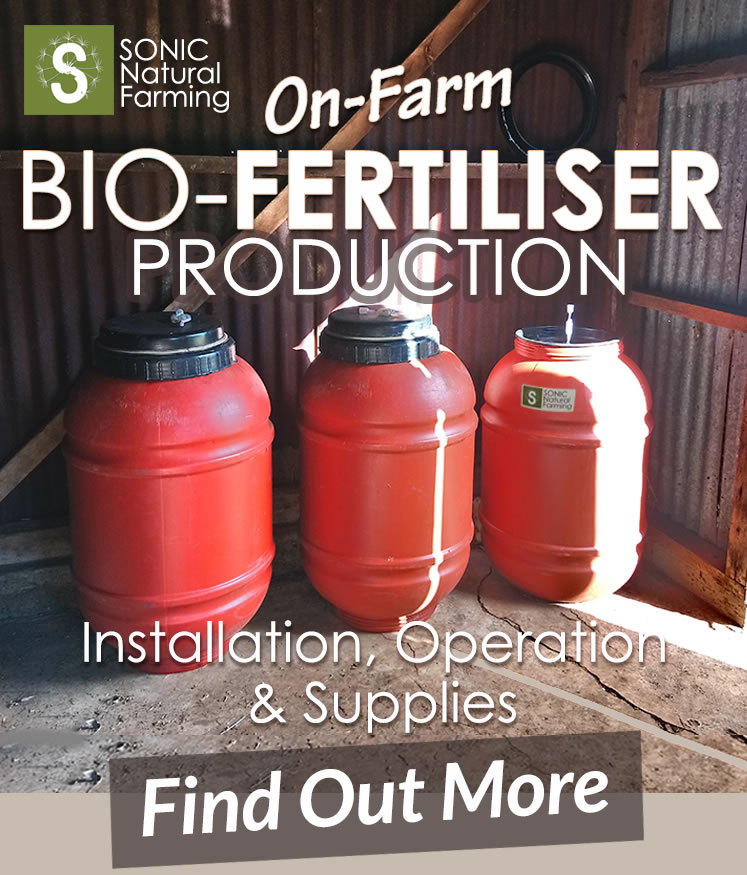
We are Australia’s leading provider of on-farm systems and training to produce Biological Liquid Fish and Seaweed Fertilisers, supplying all raw ingredients and teaching safe, consistent cold-fermentation methods.